Guides · By LawnTide · Updated October 28, 2026 · 6 min read
When to Stop Mowing in the Fall (It's a Soil Temperature Call)
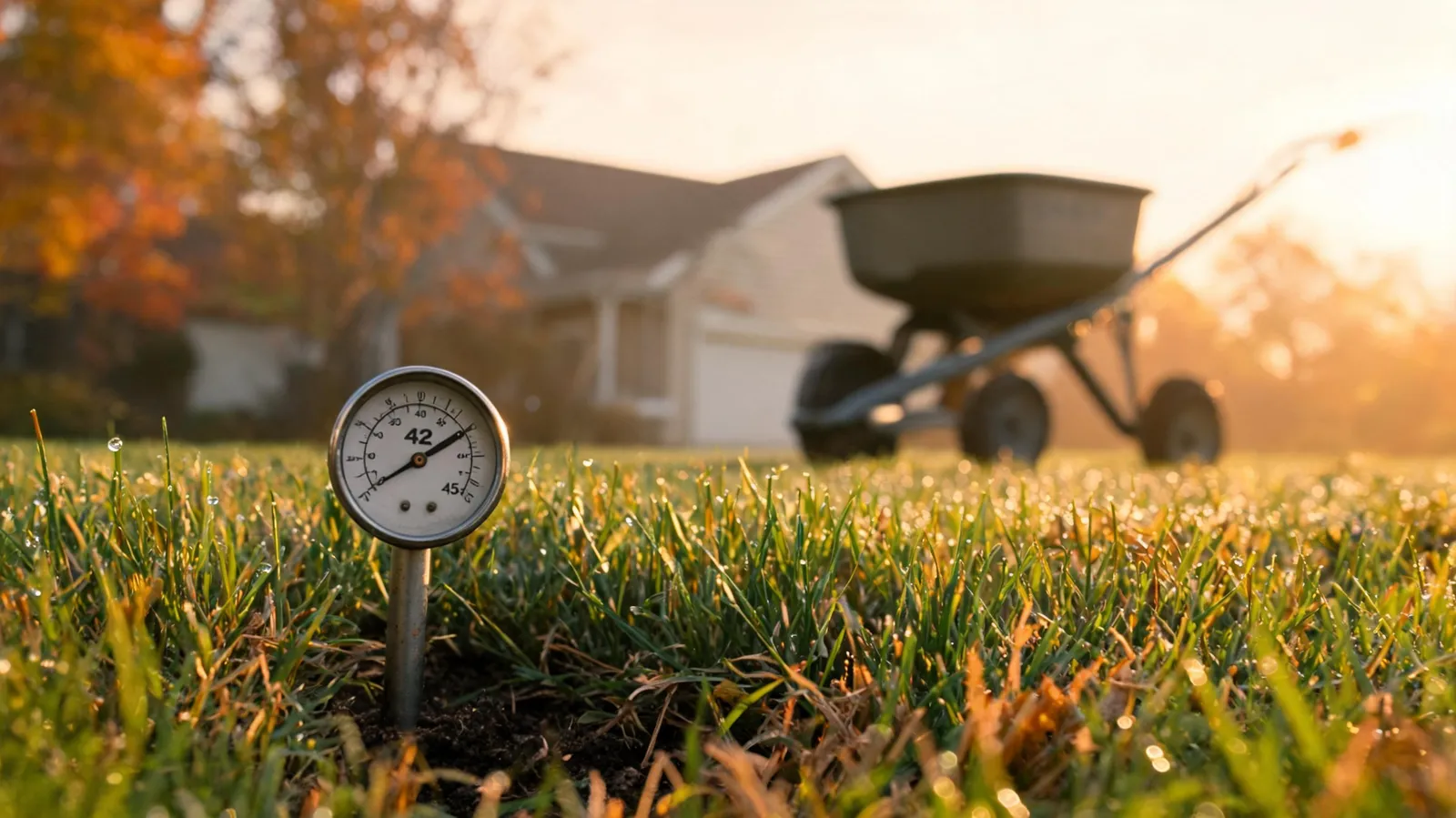
Stop mowing when your soil temperature settles near 40-45°F and the grass quits putting on new growth. That's the real signal, not a date on the calendar. Cool-season lawns keep growing into late fall, sometimes right up to the first hard freeze, and if you quit too early you're setting up a mess come spring.
The mistake most folks make is parking the mower in October because the air feels cold. Air temperature doesn't drive grass growth. Soil does. You can check the live soil temperature for your ZIP at https://www.lawntide.com/lawn and time that last mow instead of guessing.
What Soil Temperature Means Your Grass Has Stopped Growing?
Cool-season grass slows hard below 50°F soil and effectively stops growing between 40 and 45°F. Warm-season grass checks out earlier, going dormant as soil drops toward 55°F. Once growth stops, mowing stops. Simple as that.
The roots keep working after the blades quit, but the top growth you'd be cutting is done. For Kentucky bluegrass, fescue, and ryegrass in the north, that 40-45°F window usually lands in November, sometimes early December in a mild year. Bermuda, zoysia, and St. Augustine in the south brown out and stop well before that.
How do I know growth has actually stopped? Watch the clippings. When two weeks pass and the grass hasn't grown enough to need cutting, you're done for the season. One stretch of warm days can wake it back up, so stay ready through the first real freeze.
Is the first frost my signal to stop? No. A light frost barely slows cool-season grass. It greens right back up by mid-morning and keeps growing. Wait for sustained cold soil, not a single frosty lawn.
Should the Last Cut Be Shorter or Normal?
For cool-season lawns, drop the final cut to about 2 to 2.5 inches - a touch lower than your summer height. Shorter grass heading into winter holds less moisture against the crown and lowers snow mold risk. For warm-season grass going dormant, keep your normal height.
Don't scalp it. Taking off more than a third of the blade at once stresses the plant right when it's trying to store energy. If you've been mowing at 3.5 inches all summer, step down over your last two or three mows rather than hacking it all off in one pass.
The snow mold logic only matters where snow sits on the ground for weeks. If you're in Minneapolis or Buffalo, that shorter final cut earns its keep. If you're in Atlanta or Dallas, snow mold isn't your problem and there's no reason to go low.
Here's the catch on warm-season turf. Scalping a dormant Bermuda lawn in late fall exposes the crown to cold and can cause winterkill. Leave zoysia and Bermuda at their normal mowing height once they go brown.
Why Stopping Too Early Causes Lawn Disease?
Tall grass plus fallen leaves plus winter moisture is a recipe for disease. Long blades mat down under snow and wet leaves, trapping humidity against the crown. That's exactly the environment snow mold and other fungal problems love.
If you quit in October and let the lawn grow shaggy under a blanket of maple leaves, you'll likely find gray or pink circular patches when the snow melts. Keep mowing - and keep mulching or removing leaves - until growth genuinely stops.
Leaves are the bigger issue than most people think. A thick leaf layer blocks light and smothers the turf. Mulch them into the lawn with your mower while you're still cutting, or rake them off. Either way, don't let them sit all winter.
Things to clear or manage before that final mow:
- Fallen leaves - mulch or remove them, don't let them mat
- Fallen twigs and debris that could damage the mower
- Last of the summer weeds before they set seed
- Any piles of grass clippings left from earlier mows
When Do You Stop Mowing by Region?
Timing follows soil temperature, and soil cools from north to south and from high elevation down. Here's roughly when each region hits the stop point for its common grass type. Your actual date swings a week or two with the weather each year.
| Region | Common grass | Soil stop point | Typical last mow |
|---|---|---|---|
| Northeast | Cool-season | 40-45°F | Mid to late November |
| Midwest | Cool-season | 40-45°F | Early to mid November |
| Northwest | Cool-season | 40-45°F | Late November into December |
| Southeast | Warm-season | ~55°F | October |
| Southwest | Warm/transition | ~55°F | October to November |
Note: In Florida, the Gulf Coast, and south Texas, warm-season grass may never fully stop in a mild winter. You'll mow less often, but keep the mower handy on warm stretches. Hawaii mows year-round.
Note: High-elevation lawns in the Rockies and the Sierra cool off weeks ahead of lower ground at the same latitude. Denver's foothills stop well before the plains east of the city.
If you're in the transition zone - Nashville, Oklahoma City, the mid-Atlantic - you might have a tall fescue lawn that behaves cool-season even where summers run hot. Treat it like a northern lawn and keep mowing into November.
What Else to Do With That Final Mow?
The last mow is a good time to knock out two other fall jobs. Bag the clippings on your final cut if you've had any disease pressure during the year, so you're not leaving fungal material on the lawn over winter. Otherwise, mulching is fine.
If you're overseeding or planning a late nitrogen feed, those happen earlier - when soil is still in the 50s and roots are active. By the time you're at your last mow, that window has closed. Don't fertilize a lawn that's already shut down for winter; the grass can't use it and it may just run off.
Drain the mower's gas or add stabilizer after that final cut. Cold-weather fuel left sitting gums up a carburetor, and you'll fight it next April.
FAQ
Does grass keep growing after the first frost?
Yes. Cool-season grasses like fescue and bluegrass shrug off light frost and keep growing until soil temperatures hold near 40-45°F. A single frosty morning is not your cue to stop. Wait until growth clearly stops over a two-week stretch, usually after sustained cold.
How short should I cut my lawn for winter?
For cool-season grass, about 2 to 2.5 inches on the final cut - slightly shorter than summer to reduce snow mold in snowy regions. Step down gradually over your last few mows rather than scalping. Leave warm-season grass like Bermuda and zoysia at its normal height so you don't expose the crown to winterkill.
Can I stop mowing once I turn off my irrigation?
Not necessarily. Rain and cooler soil keep cool-season grass growing well past the point you shut off sprinklers. Base your last mow on soil temperature and visible growth, not your irrigation schedule. Keep cutting until the grass stops needing it.
What happens if I leave my grass long over winter?
Long grass mats down under snow and wet leaves, trapping moisture against the crown and inviting snow mold and other fungal disease. You'll often see gray or pink patches at spring green-up. Keep mowing until growth stops and clear fallen leaves to avoid it.
Stop guessing the timing — we'll watch your soil for you.
See your live soil temperature and this year's treatment windows for your ZIP, free.
Or get free email alerts — one plain-English email the week each task is due.
Every guide above comes down to your local soil temperature — see the live number and this year's windows for your city: