Guides · By LawnTide · Updated October 26, 2026 · 6 min read
When Does Brown Patch Season End? Soil Temp and Fungicide Timing
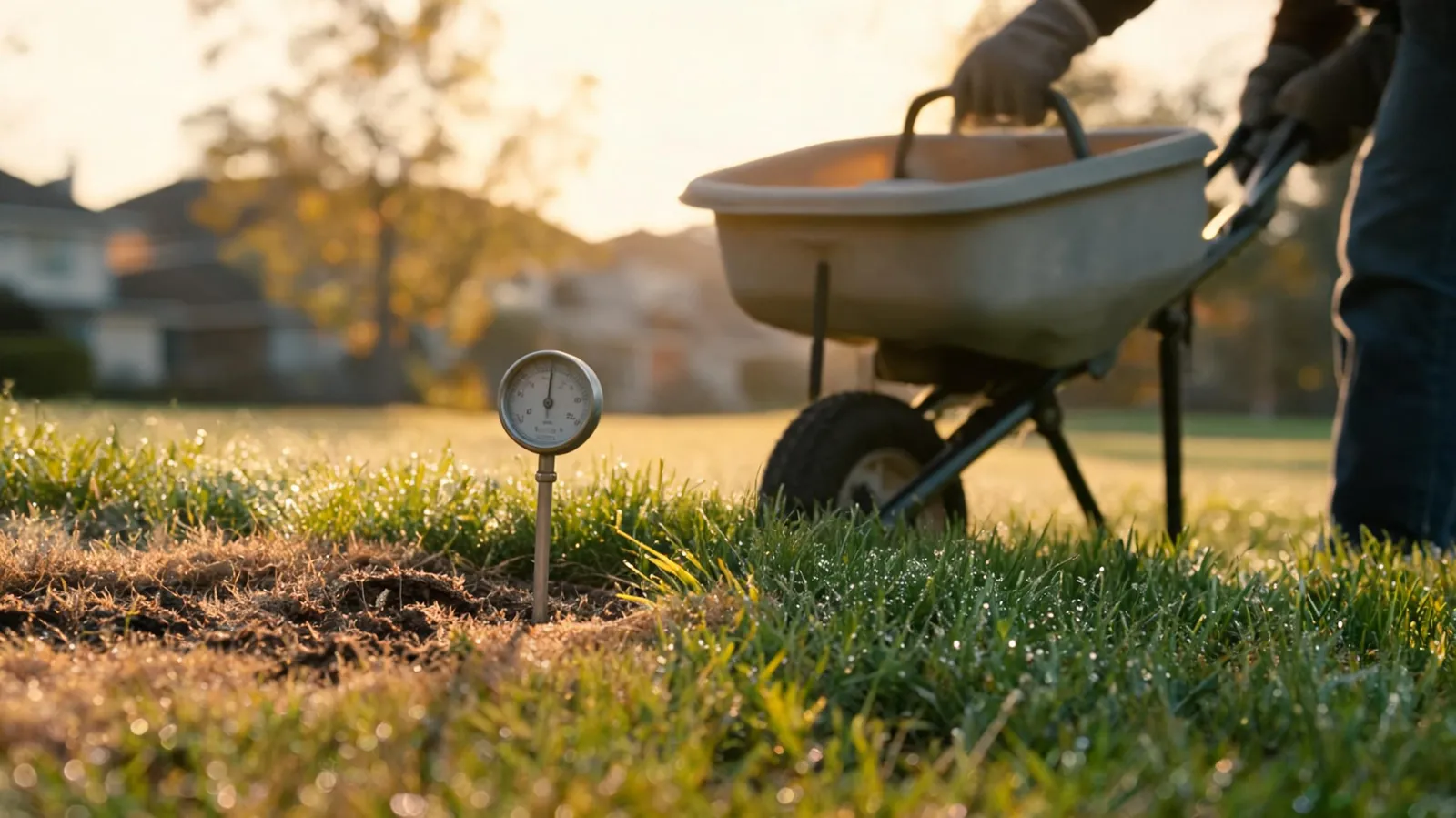
Brown patch shuts down when night air temperatures drop below 68°F and soil at 2 inches falls under about 70°F. That's the whole answer. The fungus needs warm, humid, wet nights to spread, so once your evenings turn cool and the dew burns off faster, the circular tan patches stop growing. For most of the country that happens between late September and mid-October.
The tricky part is the gap. Air cools before soil does, and a single warm, muggy week in September can wake the disease back up. So knowing your actual soil temperature beats guessing off the calendar.
What soil temperature ends brown patch?
Brown patch (Rhizoctonia solani) goes dormant when soil temperature drops below roughly 70°F and nights fall under 68°F. University turf programs peg peak activity at soil temps of 65–75°F combined with 10-plus hours of leaf wetness. Pull those conditions apart and the fungus can't advance.
The disease thrives in a narrow window: hot days, warm nights, high humidity, and wet grass blades. Break any one of those and growth slows. Cool nights are the easiest break to count on in fall. When the overnight low sits in the 50s, the leaf dries sooner and the fungus loses its runway.
You can check the live soil temperature for your ZIP at https://www.lawntide.com/lawn before you decide to spray again or put the sprayer away.
Does one cool night end it? No. You need a consistent trend — several nights below 68°F and soil holding under 70°F. A lone cold front followed by a muggy stretch won't stop an active infection.
When does brown patch season end in my region?
Season end runs from mid-September in the north to November in the Gulf South. Cool-season lawns (tall fescue, rye, bluegrass) get hit worst in summer, so the end of brown patch season lines up with the first sustained cool-down. Warm-season lawns deal with its cousin, large patch, on a totally different schedule.
| Region | Brown patch active | Season typically ends |
|---|---|---|
| Northeast | June–Sept | Late Sept |
| Midwest | June–Sept | Late Sept to early Oct |
| Southeast | May–Oct | Mid-Oct |
| Southwest | June–Sept (irrigated turf) | Early Oct |
| Northwest | July–Sept | Mid-Sept |
If you're in Columbus and it's the last week of September, your soil is probably sliding under 70°F and the worst is behind you. In Atlanta, you may still be spraying tall fescue into mid-October. Raleigh sits in between — watch the forecast, because a warm October week there isn't rare.
Note: In Florida and the Gulf Coast, warm nights can keep brown patch alive into November on St. Augustine and tall fescue. Don't assume October means safe down there. High-elevation lawns in Colorado and the Mountain West cool off weeks earlier than the chart suggests.
Should I keep spraying fungicide in September?
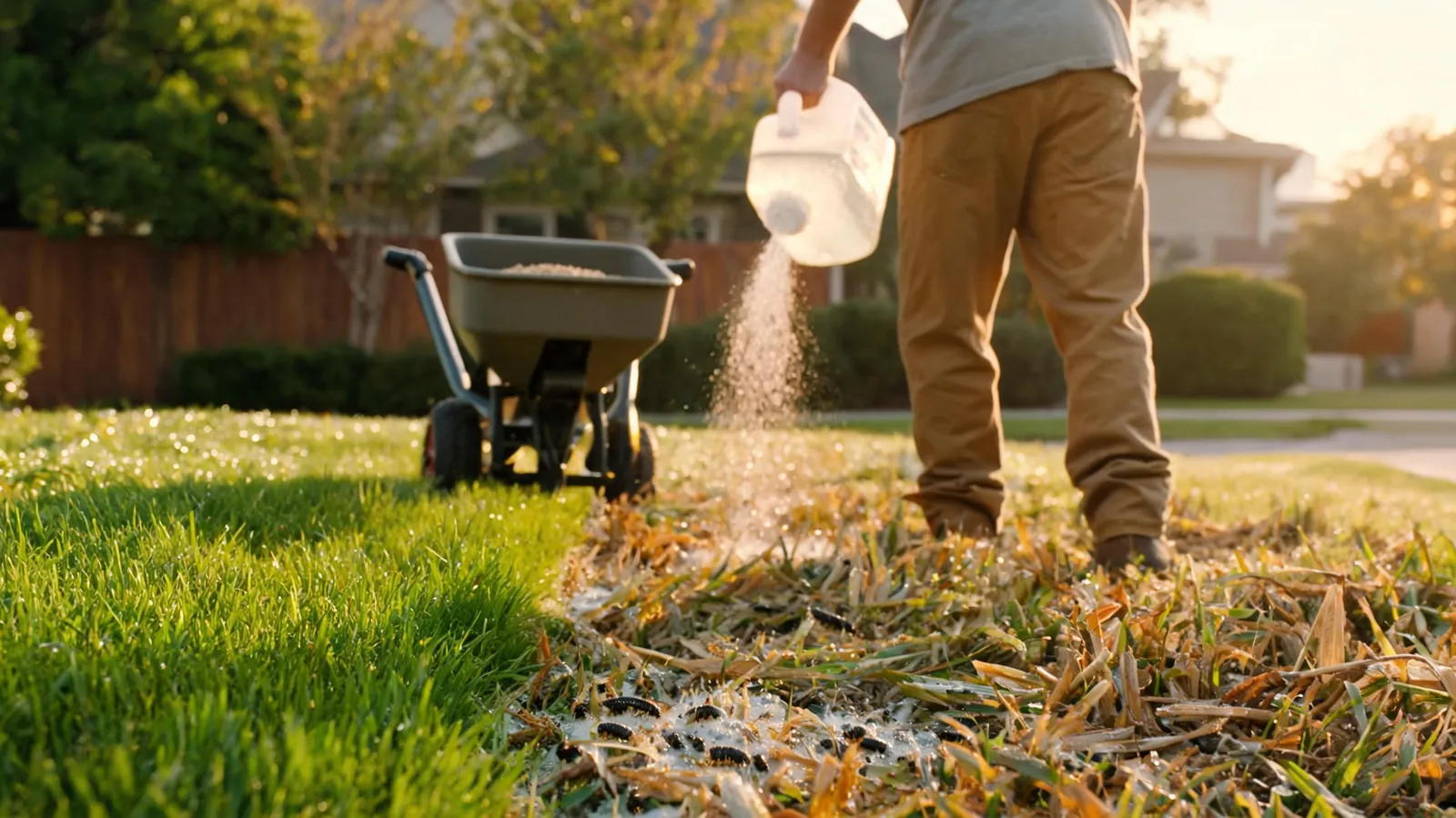
Keep spraying only if nights are still above 68°F and you see active spread. A preventive fungicide protects for 14–28 days depending on the product, so your last application of the season should land right before the final warm, humid stretch — not after nights have already cooled.
Here's the practical call. If it's mid-September in Nashville and you're still getting 70°F nights with afternoon storms, one more rotation makes sense. If you're in Minneapolis and nights have been in the 50s for a week, stop. You'd be spraying a disease that's already gone dormant.
Rotate between fungicide classes so you don't build resistance. Common active ingredients for brown patch:
- Azoxystrobin (strobilurin)
- Pyraclostrobin (strobilurin)
- Propiconazole (DMI)
- Myclobutanil (DMI)
- Triadimefon (DMI)
- Chlorothalonil (contact, multi-site)
- Fluoxastrobin
Alternate a strobilurin with a DMI or a contact so the fungus never sees the same mode of action twice in a row. Always follow the label for rate and interval — that's where the real numbers live.
Is it worth spraying once the patches are already brown? Fungicide stops spread, it doesn't regrow dead grass. If the patches have stopped expanding on their own because nights cooled, skip it and let the turf fill back in.
What cultural fixes actually stop brown patch?
Water timing matters more than any fungicide. Brown patch needs wet leaf blades for hours at a time, so the single biggest fix is watering before 10 a.m. and never in the evening. Grass that dries by mid-morning starves the fungus of the moisture it needs.
The rest of the playbook:
- Water early, water deep. One inch a week, before 10 a.m., in one or two soakings. No nightly sprinkles.
- Back off nitrogen in summer. Lush, fast growth feeds the fungus. On cool-season lawns, hold heavy nitrogen until fall once soil drops under 70°F. Push green-up in spring and fall, not July.
- Improve airflow. Prune shrubs and tree limbs around damp, shaded spots so dew dries faster.
- Mow at the right height and keep blades sharp. Clean cuts heal faster than torn ones that invite infection.
- Reduce thatch. A thick thatch layer holds moisture against the crowns. Dethatch or core-aerate when the lawn is actively growing.
Fix the watering schedule first. A lot of "my fungicide isn't working" problems are really "my sprinklers run at 8 p.m." problems.
How is large patch different from brown patch?
Large patch is the same fungus (Rhizoctonia) but it attacks warm-season grasses in spring and fall, not summer. It shows up when soil temperatures are in the 50–70°F range — exactly the window when brown patch on cool-season turf is shutting down. Same organism, opposite calendar.
If you've got zoysia, St. Augustine, centipede, or bermuda, your disease worry isn't summer brown patch — it's large patch in fall as the turf goes dormant and again in spring as it greens up. Preventive fungicide for large patch goes down in fall when soil hits about 70°F and falling, which is the opposite of when you'd stop spraying a tall fescue lawn.
Grasses most affected by large patch:
- Zoysiagrass
- St. Augustinegrass
- Centipedegrass
- Seashore paspalum
- Bermudagrass (less common, usually minor)
So in the same October week, a fescue owner is putting the sprayer away while a zoysia owner two doors down is getting the first large-patch application out. Different grass, different target soil temp, different timing.
FAQ
Can brown patch come back after it cools down?
Yes, during a warm spell. If nights climb back above 68°F with humidity and wet grass, a dormant infection can resume spreading. This is common in a mild October across the transition zone. Watch your soil temperature and overnight lows before assuming the season is over.
Will brown patch grass grow back on its own?
Often, yes. Brown patch usually kills leaf tissue, not the crown or roots, so the grass recovers once conditions improve and the lawn is actively growing. Seed in bare spots in early fall for cool-season lawns. Severe or repeated infections may need overseeding to fully fill in.
What temperature does brown patch stop spreading?
Spread stops when nighttime air stays below about 68°F and soil at 2 inches falls under roughly 70°F. The fungus also needs long periods of leaf wetness, so dry, cool nights shut it down faster than the temperature number alone suggests.
Should I fertilize a lawn with active brown patch?
No nitrogen while it's active. High nitrogen pushes soft, fast growth the fungus feeds on, which makes the outbreak worse. Wait until the disease stops spreading and soil cools, then fertilize cool-season grass in fall to help it recover and thicken up.
Stop guessing the timing — we'll watch your soil for you.
See your live soil temperature and this year's treatment windows for your ZIP, free.
Or get free email alerts — one plain-English email the week each task is due.
Every guide above comes down to your local soil temperature — see the live number and this year's windows for your city: