Guides · By LawnTide · Updated November 2, 2026 · 7 min read
First Frost vs. Soil Temperature: What Actually Ends the Lawn Season
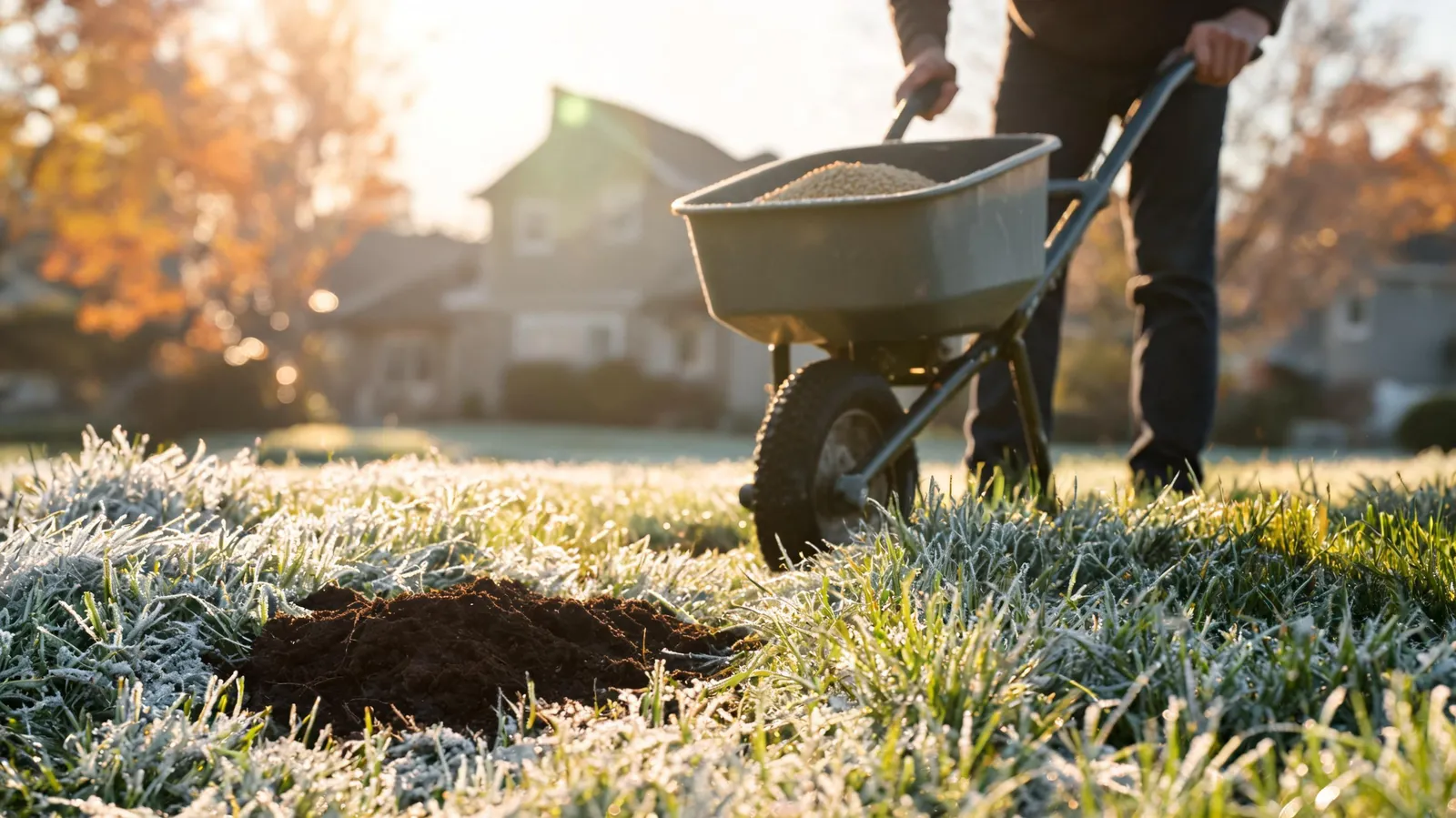
First frost doesn't end your lawn season. Soil temperature does. Your grass can take a white, crunchy morning and keep right on growing roots underground, because the part of the plant that matters in fall lives below the frost line.
That gap between your first frost date and the day your soil actually shuts down is where most homeowners quit too early. They see frost on the windshield, put the spreader in the garage, and skip the single most valuable feeding of the year. Here's what's really happening down in the dirt and how to time your last fall jobs around it.
Does first frost mean the lawn season is over?
No. First frost kills tender annuals and tomato plants, but it doesn't stop turfgrass. Cool-season grass keeps growing roots until soil temperature at the 2-inch depth drops below about 40°F. That usually happens 3 to 5 weeks after your first air frost.
Frost is an air event. When overnight air hits 32°F, water vapor freezes on exposed blades and you get that silver sheen. But soil holds heat. Two inches down, the ground can sit 10 to 15 degrees warmer than the air above it on a frosty morning. The crown and roots of Kentucky bluegrass, fescue, and ryegrass don't even notice.
So the blades stop growing up - you quit mowing - while the roots keep packing on mass and storing carbohydrates. That's the whole point of fall for a cool-season lawn.
Will one hard frost kill my grass? No. Cool-season turf tolerates frost and even hard freezes once it's acclimated. The blades may go dormant and brown, but the crown survives down into the single digits and greens back up in spring.
Why does soil temperature matter more than the frost date?
Soil temperature controls root activity and nutrient uptake. Roots draw up nitrogen and keep growing as long as soil stays above 40°F. The frost date on a map only tells you when the air first dipped to freezing - it says nothing about what the roots are doing.
Think about what a frost map actually is. It's a 30-year average of the first date each ZIP code sees 32°F air. Useful for knowing when to cover the mums. Useless for knowing when your grass stops feeding.
In Columbus, Ohio, first frost lands around October 10-20. But the soil at 2 inches often doesn't drop below 40°F until mid-to-late November. That's a month of root growth happening after the "season-ending" frost most people respect.
You can check the live soil temperature for your exact ZIP at https://www.lawntide.com/lawn - that number, not the calendar, tells you when to make your last moves.
When does grass actually stop growing in fall?
Top growth (the blades) slows hard once soil drops below 50°F and basically stops below 45°F. Root growth continues until soil hits 40°F. Below 40°F the plant goes fully dormant and holds until spring warms the ground back up.
Here's the sequence every fall, in order:
- Soil 55-50°F: Blades slow down. You mow less often. Perfect window for overseeding to still establish.
- Soil 50-45°F: Top growth nearly stops. Roots are still active and hungry. This is your late-fall fertilizer window.
- Soil 45-40°F: Last call for nutrient uptake. Dormant feeding still gets absorbed and stored.
- Soil below 40°F: Full dormancy. No growth, no uptake. Season's done.
Regional timing: first frost vs. soil shutdown
The lag between first frost and the soil dropping below 40°F is the money window. Here's roughly how it plays out across the country.
| Region | Typical first frost | Soil hits 40°F (2 in) | Last fertilizer window |
|---|---|---|---|
| Northeast | Early-mid October | Mid-late November | Late Oct through mid-Nov |
| Midwest | Early-mid October | Mid-late November | Late Oct through mid-Nov |
| Northwest | Mid Oct-early Nov | December or later | November into early Dec |
| Southeast (upper) | Late Oct-Nov | December | November |
| Southwest (high desert) | Mid-late October | Late November | Early-mid November |
Note: Warm-season lawns (Bermuda, zoysia, St. Augustine, centipede) in Florida, the Gulf Coast, and south Texas play by different rules. They go dormant on cold, not on a schedule, and you should not push late nitrogen into them - it invites winter kill. This fall-feeding advice is for cool-season grass.
Note: High-elevation lawns in Colorado, Utah, and the mountain West see soil cool fast once snow flies. Your window between frost and 40°F soil can be short, so watch the soil number closely.
Does late-fall fertilizer still work after frost?
Yes, and it's the best feeding of the year. As long as soil stays above 40°F, roots pull up nitrogen and store it as carbohydrates. Those reserves drive early spring green-up and root density before you ever touch the spreader in April. Several frosts don't change that.
This is the application turf programs call the "dormant" or late-fall feeding. Blades aren't growing, so the lawn doesn't waste the nitrogen on top growth you'd just have to mow. Instead it all goes to the roots and crown. You get a thicker, earlier-greening lawn next spring without a flush of spring mowing.
Timing is everything. Apply when top growth has stopped but the soil is still in the 45-50°F range and holding above 40°F. In Minneapolis that's often early-to-mid November, well after first frost. Follow the label for rate - never guess.
Is it too late to fertilize if we've already had snow? Maybe not. Snow on the ground doesn't automatically mean the soil is frozen. If the soil is still above 40°F under that snow and you can spread evenly, the roots can still use it. Once soil locks below 40°F, hold off until spring.
Can you put down pre-emergent after the first frost?
Yes. Fall dormant pre-emergent is applied as soil cools below 50°F, which is usually right around or just after first frost. It sits in the soil through winter and blocks spring weeds before they germinate, so post-frost is exactly the right time.
Dormant pre-emergent targets early-germinating weeds that wake up before you'd normally treat in spring. The chemistry doesn't need warm soil to go down - it needs to be in place before the target weeds sprout.
Weeds a fall or dormant pre-emergent program commonly helps control:
- Crabgrass (large and smooth)
- Goosegrass
- Poa annua (annual bluegrass)
- Henbit
- Common chickweed
- Purple deadnettle
- Prostrate knotweed
Note: Don't apply pre-emergent anywhere you plan to seed - it blocks your grass seed from germinating too. Keep fall seeding and fall pre-emergent in separate areas or separate years.
How do I read the real end of the season?
Stop watching the frost map and start watching two numbers: soil temperature at 2 inches and whether the blades are still growing. When soil holds below 40°F for several days straight and you haven't mowed in two weeks, the season is genuinely over.
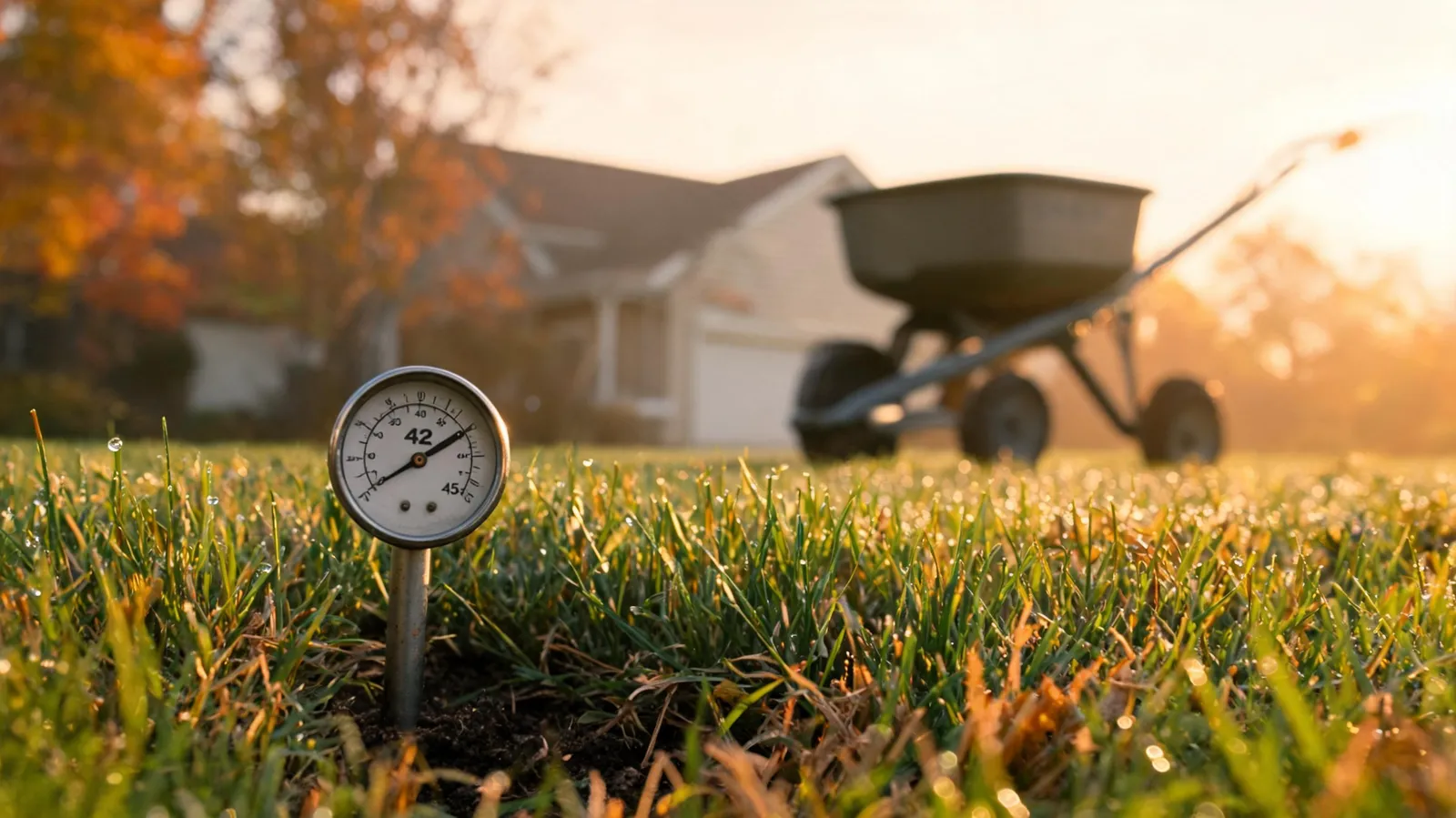
A cheap soil thermometer pushed 2 inches into the turf in the morning tells you most of what you need. Take the reading a few days running - one cold snap doesn't mean dormancy. You want a sustained trend below 40°F.
Your last mow should come when top growth has clearly stopped. Cut cool-season grass to about 2.5 inches for the winter - short enough to resist snow mold, long enough to protect the crown. Then you're done until spring soil climbs back past 50°F.
FAQ
How long after first frost can I still fertilize my lawn?
Usually 3 to 5 weeks. Roots keep taking up nitrogen until soil temperature at 2 inches drops below 40°F, which lags well behind the first air frost in most regions. In the Midwest and Northeast that often means you can feed into mid-November despite frosts in early October.
Does frost kill grass roots?
No. Frost forms on the blades above ground, but soil insulates the roots and crown, keeping them 10-15°F warmer than the frosty air. Cool-season grass roots stay active until the soil itself drops below 40°F, and the crown survives hard freezes well into winter.
What soil temperature stops grass from growing?
Top growth stops around 45°F and roots stop growing below 40°F at the 2-inch depth. Below 40°F the plant goes dormant and holds until spring. This is why soil temperature, not the calendar, marks the true end of the lawn season.
Can I apply dormant pre-emergent after it snows?
Often yes, if the soil hasn't frozen solid and you can spread the product evenly across the turf. Dormant pre-emergent is designed to sit in the soil over winter and stop spring weeds, so a light snow doesn't ruin it. Always follow the product label for conditions and timing.
Stop guessing the timing — we'll watch your soil for you.
See your live soil temperature and this year's treatment windows for your ZIP, free.
Or get free email alerts — one plain-English email the week each task is due.
Every guide above comes down to your local soil temperature — see the live number and this year's windows for your city: