Guides · By LawnTide · Updated October 21, 2026 · 7 min read
When to Apply Lime to Your Lawn (and Why Fall Wins)
Lime raises soil pH, and you only need it if a soil test says your pH is below about 6.0. That's the whole deal. Lime isn't fertilizer, it won't green up a lawn on its own, and dumping it on without a test is how people waste a Saturday and a bag of money. Cool-season grasses like fescue and bluegrass want a pH between 6.0 and 7.0. Drop below that and the lawn can't grab the nitrogen, phosphorus, and potassium already sitting in the soil.
So before anything else: get a soil test. A mail-in kit from your county extension office runs about 15 bucks and tells you your exact pH and how far off you are. Skip this step and you're guessing.
When is the best time to apply lime?
Fall is the best time to lime, roughly September through November depending on where you live. Lime moves through soil slowly, and winter's freeze-thaw cycles crack the surface open and pull the material down 1 to 2 inches over the dormant months. By spring green-up, the pH has started to shift.
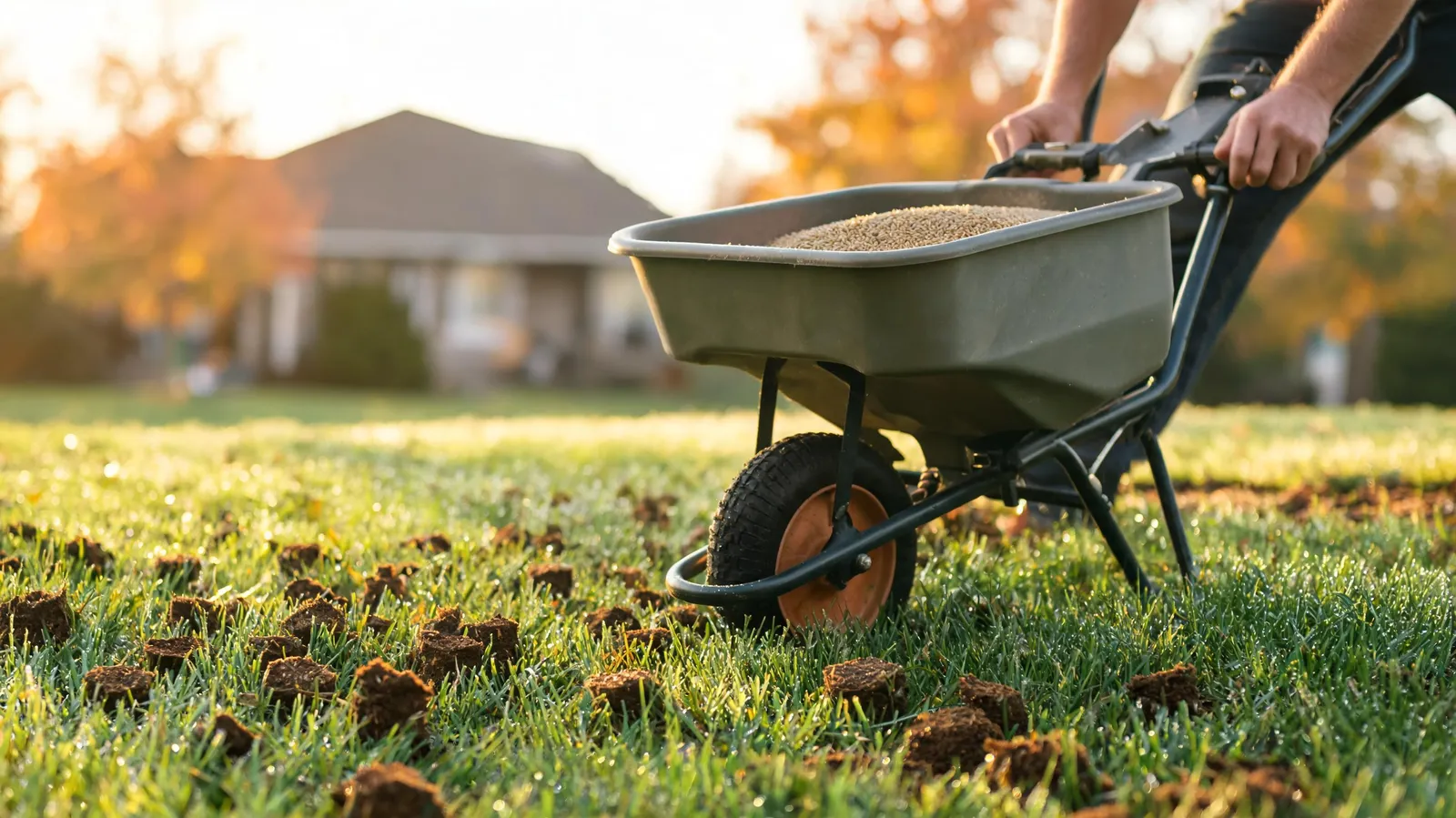
That timing also keeps lime out of the way of everything else. Fall is when you're seeding, aerating, and putting down your heavy nitrogen feeding. Lime plays nice with all of it - in fact, aerating right before you lime gives it a head start into the root zone. If you're in Cincinnati and it's late September, you're in the sweet spot: overseed, aerate, then spread your lime.
Can I apply lime in spring instead? Yes, early spring works if you missed fall. You just lose the winter freeze-thaw boost, so it takes longer to move the needle. Summer is the worst - hot, dry soil and active grass mean slower reaction and more stress.
Why does fall beat every other season?
Fall wins for three reasons. First, freeze-thaw. Water seeps into soil cracks, freezes, expands, and physically works the lime particles downward - no tilling required. Second, lime is slow, often 6 to 12 months to fully register a pH change, so a fall application is ready to help come spring. Third, no scheduling conflict.
Lime and fertilizer don't belong in the same spreader pass. Lime is alkaline, and some nitrogen sources react with it and gas off ammonia - you lose feed and slow the lime. Space them out by a few weeks. Fall gives you room to do that. Get your big nitrogen feeding down, wait, then lime a couple weeks later.
Note: Warm-season lawns in Florida, south Texas, and the Gulf Coast run on a different clock. St. Augustine and Bahia tolerate lower pH, and much of that region already has alkaline soil that never needs lime. Test first - you may need sulfur to lower pH, not lime to raise it.
Fast-acting or pelletized dolomitic - which should I buy?
Use pelletized dolomitic lime for your standard fall application; it's cheap, easy to spread, and corrects pH over 6 to 12 months. Reach for fast-acting (prilled calcitic) lime only when you need a quicker nudge or you're liming in spring and want results that season. It costs more per pound but reacts in weeks.
Dolomitic lime contains magnesium along with calcium, so it's the right pick if your soil test also flags low magnesium. Calcitic lime is mostly calcium - better if magnesium is already fine. Most homeowners are well served by pelletized dolomitic. Skip powdered ag lime unless you enjoy wearing a cloud of dust.
Here's the quick comparison:
| Lime type | Speed to shift pH | Best for | Spreadability |
|---|---|---|---|
| Pelletized dolomitic | 6-12 months | Standard fall application, low magnesium | Easy, low dust |
| Pelletized calcitic | 6-12 months | Adequate magnesium already | Easy, low dust |
| Fast-acting (prilled) | 2-8 weeks | Spring timing, quick correction | Easy, low dust |
| Powdered ag lime | 3-6 months | Large acreage, budget jobs | Messy, very dusty |
How much lime do I apply per 1,000 square feet?
The bigger your pH gap, the more lime you need, and soil type matters. Sandy soil needs less; clay needs more to move the same amount. As a rough guide on average loam, a 0.5 pH gap takes about 20-25 lbs of pelletized lime per 1,000 sq ft, a 1.0 gap about 40-50 lbs.
Never put down more than 50 lbs per 1,000 sq ft in one pass. If your test says you need more, split it: half in fall, half the following fall. Overdoing it can swing pH too high, which locks up nutrients just like low pH does. Always defer to the rate on your soil test report and the product label.
Grasses and conditions this applies to:
- Kentucky bluegrass, tall fescue, fine fescue, perennial ryegrass - target pH 6.0-7.0
- Bermuda, zoysia - tolerate down to about 5.8-6.0
- Centipede - prefers acidic soil around 5.0-6.0, often needs no lime at all
- St. Augustine - handles 6.0-7.5, common in alkaline Southern soils
- Moss patches, poor fertilizer response, heavy thatch over acidic soil - signs to test for low pH
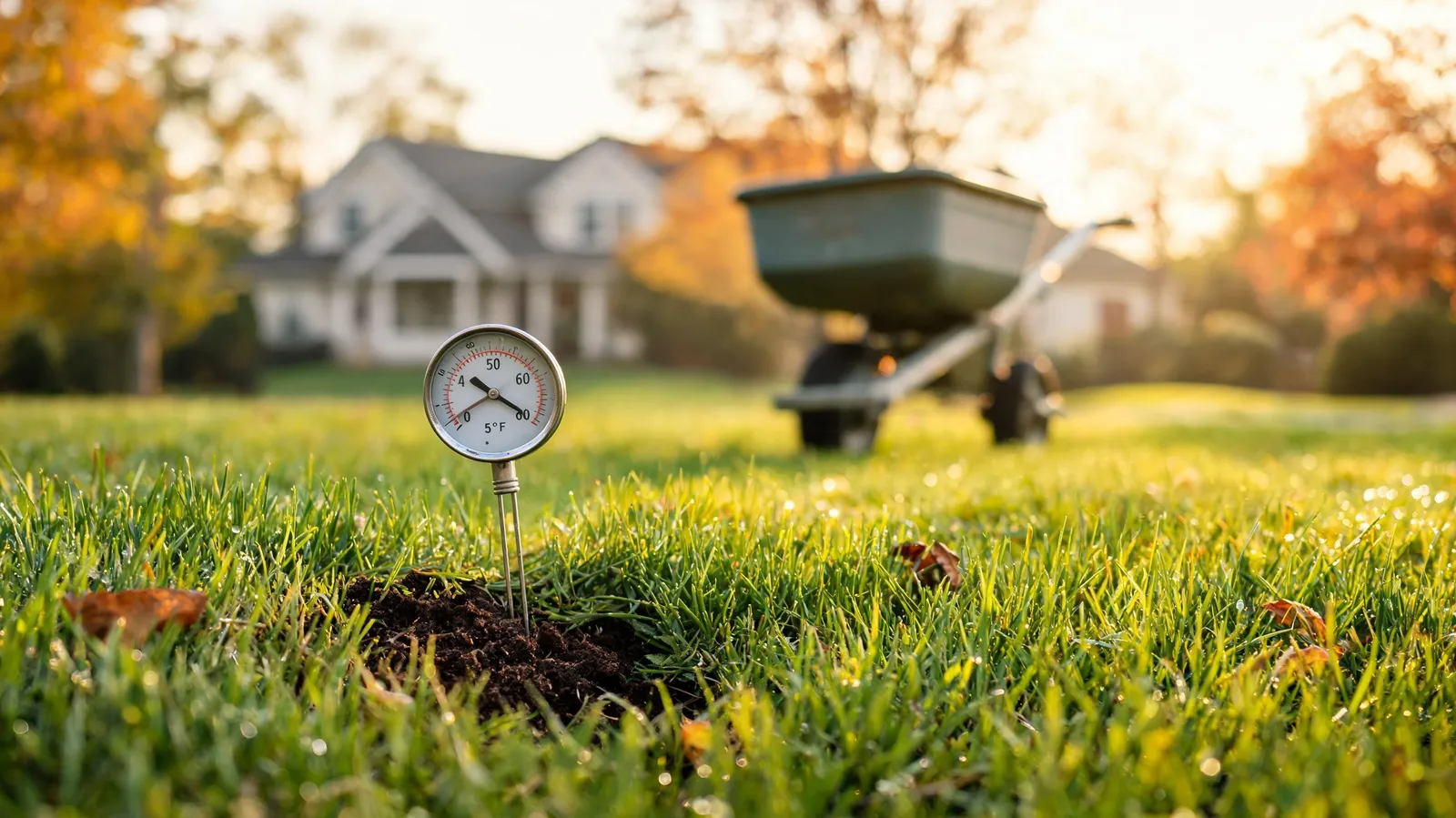
You can check the live soil temperature for your ZIP at https://www.lawntide.com/lawn to help time your fall aeration and liming window.
How to apply lime the right way
Spread pelletized lime with a broadcast or drop spreader, same as fertilizer. Set it to half the labeled rate and make two passes in a crosshatch pattern - that beats streaking. Water it in lightly afterward to settle the pellets. If you're aerating, do that first so lime drops into the open holes.
Don't lime a frozen lawn or one buried in leaves. The material needs soil contact. And don't expect to retest for at least 3 to 6 months - pH moves slowly, and testing too soon just tells you lime is slow.
Regional timing by band
| Region | Best lime window | Notes |
|---|---|---|
| Northeast | Sept-Nov | Acidic soils common, lime needs are frequent |
| Midwest | Sept-Oct | Lime before ground freezes hard |
| Southeast | Oct-Dec | Test first - clay can be acidic, coastal often alkaline |
| Northwest | Sept-Nov | High rainfall leaches pH low; regular liming typical |
| Southwest | Rarely needed | Many soils already alkaline - test for sulfur need instead |
Note: High-elevation and mountain lawns get a shorter window. Lime before the first hard freeze locks the ground, usually by mid-October.
FAQ
How long does it take for lime to work on a lawn?
Pelletized dolomitic lime takes 6 to 12 months to fully shift soil pH. Fast-acting prilled lime can show a measurable change in 2 to 8 weeks. Either way, retest your soil no sooner than 3 to 6 months after applying to see real movement.
Can I apply lime and fertilizer at the same time?
No. Lime is alkaline and can react with nitrogen fertilizers, releasing ammonia gas and wasting feed. Space the two applications a few weeks apart. Fall gives you plenty of room to feed first, wait, then lime.
How do I know if my lawn needs lime?
A soil test is the only reliable way. If pH reads below 6.0 for cool-season grass, you likely need lime. Visual clues like moss, weak fertilizer response, and thinning turf hint at low pH, but they aren't proof - test before you spread.
Will lime kill weeds or moss in my lawn?
Not directly. Lime raises pH, which makes conditions less friendly to moss that thrives in acidic soil, but it won't kill established moss or broadleaf weeds. Fix the drainage, shade, and compaction that let moss move in, then correct pH to keep it from coming back.
Stop guessing the timing — we'll watch your soil for you.
See your live soil temperature and this year's treatment windows for your ZIP, free.
Or get free email alerts — one plain-English email the week each task is due.
Every guide above comes down to your local soil temperature — see the live number and this year's windows for your city: