Guides · By LawnTide · Updated October 19, 2026 · 6 min read
Fall Aeration and Overseeding: The Soil Temperature Window
Aerate and overseed your cool-season lawn when the soil sits between 50 and 65°F and it's dropping, not climbing. That window opens 6 to 8 weeks before your first frost, which is exactly how much time new grass needs to put down roots before winter. Miss it, and you're either seeding into summer heat that cooks the seedlings or into cold ground that won't germinate.
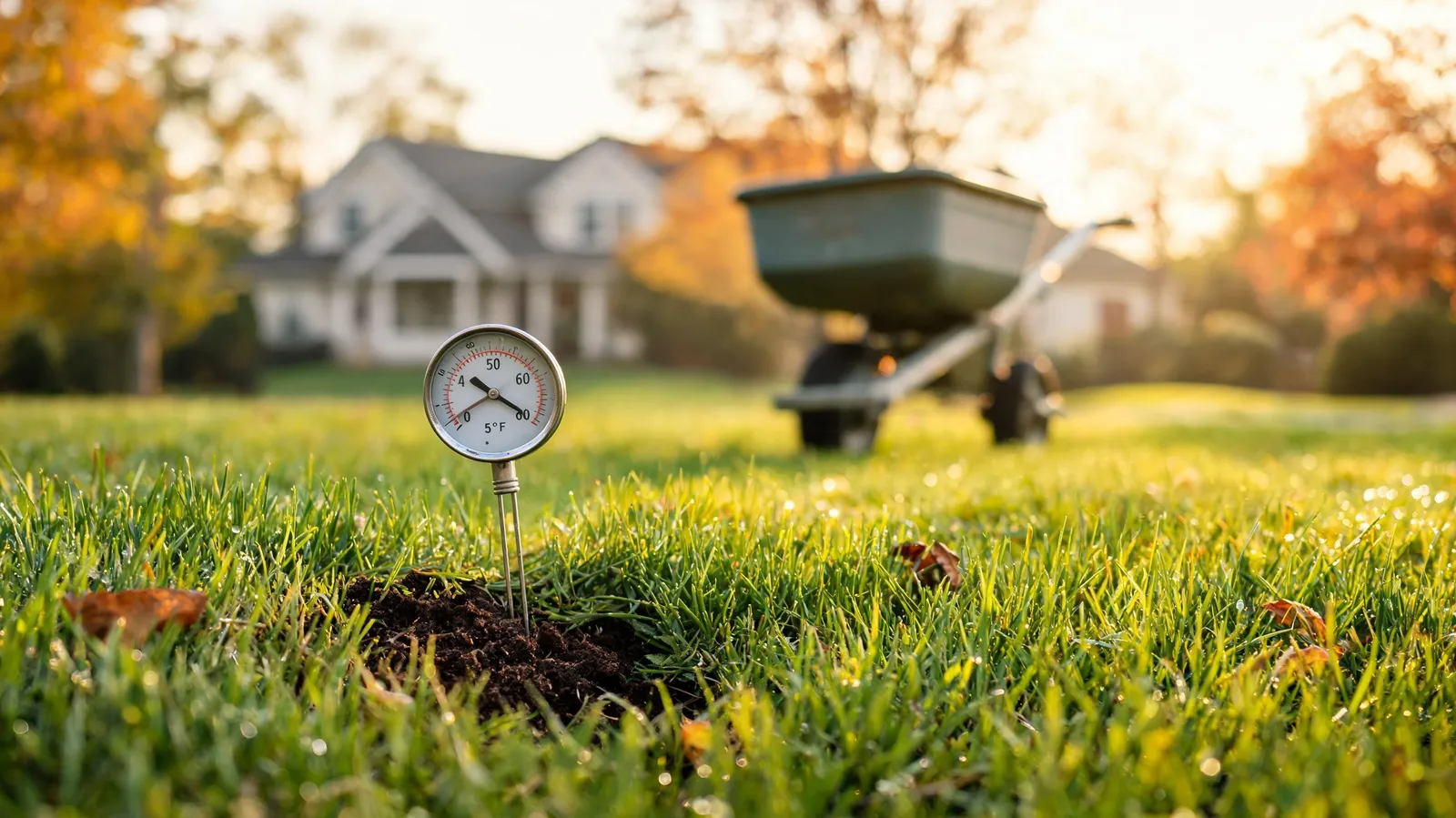
The air temperature lies to you in fall. A warm afternoon can follow a cold night, and the soil holds heat longer than the air. That's why you measure the dirt, not the thermometer on your porch.
What soil temperature is best for fall overseeding?
Target 50-65°F at 2 to 4 inches deep, with the trend falling. That's the germination sweet spot for Kentucky bluegrass, tall fescue, and perennial ryegrass. Below 50°F growth stalls. Above 70°F you invite disease and weak, heat-stressed seedlings that won't survive their first cold snap.
The "falling" part matters as much as the number. In spring the soil passes through 55°F too, but it's warming toward summer heat that'll fry young grass before it establishes. Fall gives seedlings a cooling runway and months of root-building before the next hot spell. University turf programs point to 50-65°F soil as the cool-season germination band for exactly this reason.
Check the live soil temperature for your ZIP at https://www.lawntide.com/lawn so you're not guessing.
Is 48°F too cold to seed? It's borderline. Germination slows way down and may stall if it keeps dropping. If you're at 48 and falling, you've likely missed the window for this year. Wait for spring or dormant-seed in late fall and let it sprout on its own schedule.
How do I count back from first frost?
Find your average first frost date, then subtract 6 to 8 weeks. That's your deadline to have seed down. New grass needs to germinate, tiller, and root before a hard freeze, and that takes the better part of two months.
Say you're in Columbus and your first frost averages around October 20. Count back eight weeks and you're seeding by the fourth week of August through early September. Labor Day weekend puts you right in the pocket. In Minneapolis, with frost closer to early October, you're seeding in mid-to-late August. In Atlanta's cool-season pockets, you've got until late September or even early October because frost comes later.
Get frost dates from your local extension office or any national frost map by ZIP. They're averages, so build in a cushion and aim for the earlier end of the window if you can.
When should each region aerate and overseed?
Cool-season lawns run on a tight fall schedule that shifts with your frost date. Here's the breakdown.
| Region | Grass type | Fall seeding window | Notes |
|---|---|---|---|
| Northeast | Cool-season | Late Aug - late Sep | Earlier in NY/New England, later in PA/NJ |
| Midwest | Cool-season | Mid Aug - mid Sep | Shorter window up north near the Dakotas |
| Northwest | Cool-season | Early Sep - mid Oct | Mild, wet falls stretch the window |
| Southeast (upper) | Cool-season (tall fescue) | Mid Sep - mid Oct | Transition zone; frost comes late |
| Southeast (lower) | Warm-season | Do NOT fall-seed | Aerate in summer instead |
| Southwest | Warm-season | Do NOT fall-seed | See overseeding exception below |
Note: In the Deep South and coastal Southwest, your lawn is almost certainly Bermuda, Zoysia, St. Augustine, or centipede - all warm-season grasses. Fall aeration and overseeding hurt them. The one exception is overseeding dormant Bermuda with annual ryegrass for winter color, which is a different job with different timing (soil around 70°F and falling, usually October).
Note: At high elevation in the Rockies or Sierra, your frost date comes weeks earlier than nearby valleys. A Denver suburb at 5,200 feet seeds earlier than you'd expect - plan for mid-to-late August.
Why do warm-season lawns get aerated in summer, not fall?
Warm-season grasses grow hardest when soil is 65-75°F and rising, which happens in late spring and summer. Aerating then lets the grass heal the holes fast and fill in. Aerate in fall and you open the turf right as it goes dormant, so the holes sit there and you've invited winter weeds into bare soil.
If you've got Bermuda, Zoysia, St. Augustine, centipede, or buffalograss, your aeration month is roughly May through July depending on how far south you are. Houston aerates earlier than Oklahoma City. The rule holds: aerate warm-season turf when it's actively growing, never when it's heading to sleep.
Grasses this guide covers:
- Cool-season (fall job): Kentucky bluegrass, tall fescue, fine fescue, perennial ryegrass
- Warm-season (summer job): Bermuda, Zoysia, St. Augustine, centipede, buffalograss, bahia
Should I aerate and overseed on the same day?
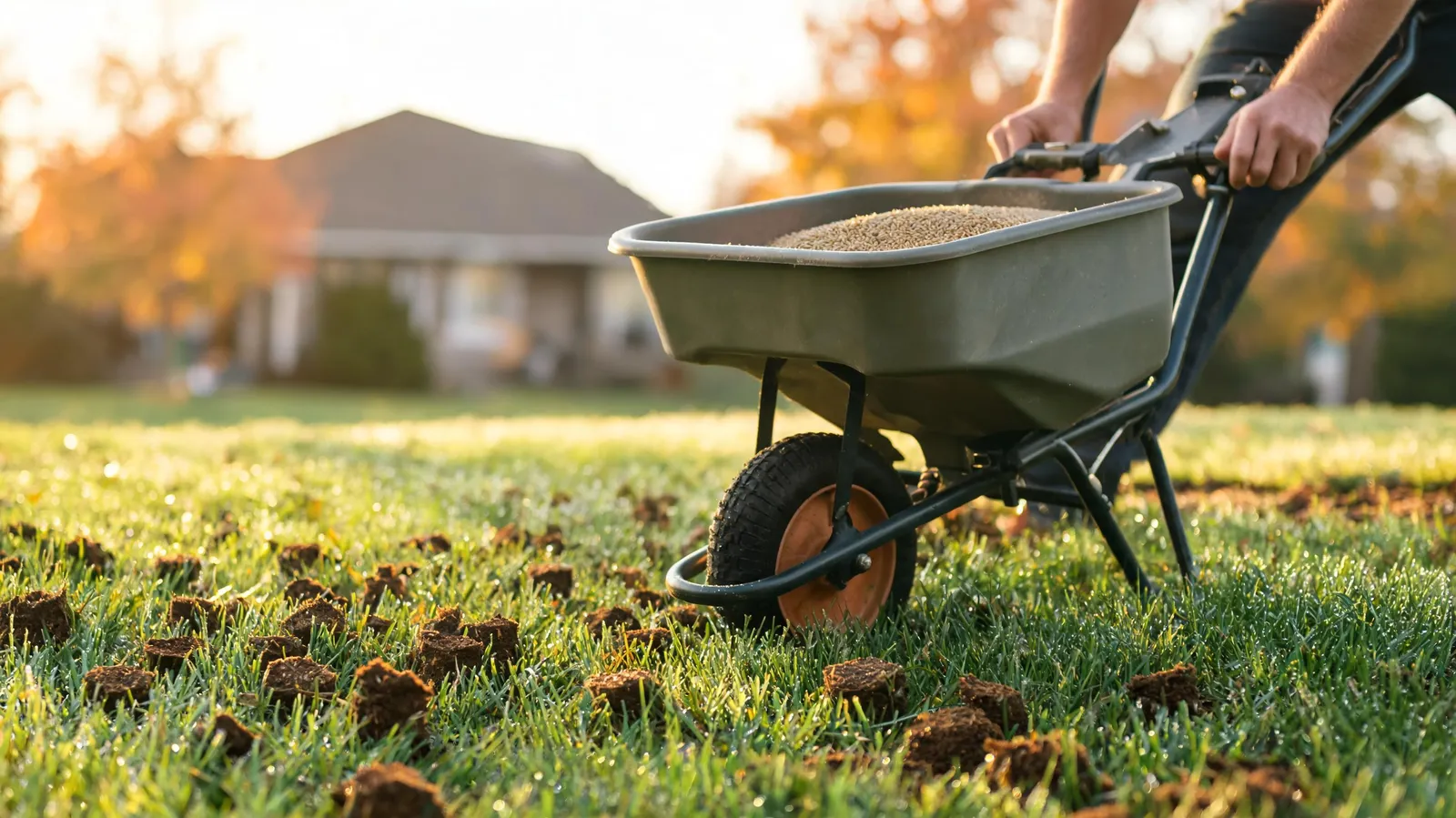
Yes. Core aerate first, then seed immediately. The holes give seed a protected, soil-contact pocket to settle into, which beats scattering seed on packed ground every time. Seed-to-soil contact is the whole game with overseeding.
Run a core aerator that pulls plugs - not a spike aerator that just pokes holes and compacts the sides. Make two passes in different directions if your soil is heavy clay. Leave the plugs on the surface; they break down and top-dress the lawn on their own in a couple weeks.
After seeding, water lightly every day to keep the top inch moist. Not soaked - moist. Most cool-season seed germinates in 5 to 21 days depending on species; ryegrass is fastest, bluegrass the slowest. Hold off on mowing until the new grass hits 3 to 3.5 inches.
Do I need to bag my clippings after overseeding? For the first few mows, yes, or mulch with a sharp blade on a high setting. You don't want heavy clumps smothering tender seedlings. Once the new grass has been mowed two or three times, go back to normal.
FAQ
How late is too late to overseed in fall?
Once soil drops below 50°F and keeps falling, germination stalls and you've likely missed the window. For most of the cool-season US that's mid-to-late October. If you're past it, consider dormant seeding in late November - spreading seed on cold ground so it germinates naturally when soil warms in spring.
Can I overseed without aerating?
You can, but results are weaker. Aeration relieves compaction and creates the soil contact seed needs to root. If you skip it, at least rake or scratch the surface hard before seeding and keep the seedbed consistently moist. Expect a thinner fill-in than you'd get with core aeration.
Do I fertilize when I overseed?
Use a starter fertilizer high in phosphorus at seeding to feed root development, following the label rate. Skip weed-and-feed products entirely - the pre-emergent herbicide in them will kill your new grass seed along with the weeds. Wait until seedlings have been mowed a few times before any weed control.
What first frost date should I use?
Use your area's average first fall frost from a local extension office or a frost-date-by-ZIP map. These are 50% probability dates, so a frost can come earlier. Seed toward the early end of your window to give grass the full 6-to-8-week cushion before cold sets in.
Stop guessing the timing — we'll watch your soil for you.
See your live soil temperature and this year's treatment windows for your ZIP, free.
Or get free email alerts — one plain-English email the week each task is due.
Every guide above comes down to your local soil temperature — see the live number and this year's windows for your city: