Guides · By LawnTide · Updated October 16, 2026 · 7 min read
Best Soil Temperature for Fall Fertilizer on Cool-Season Lawns
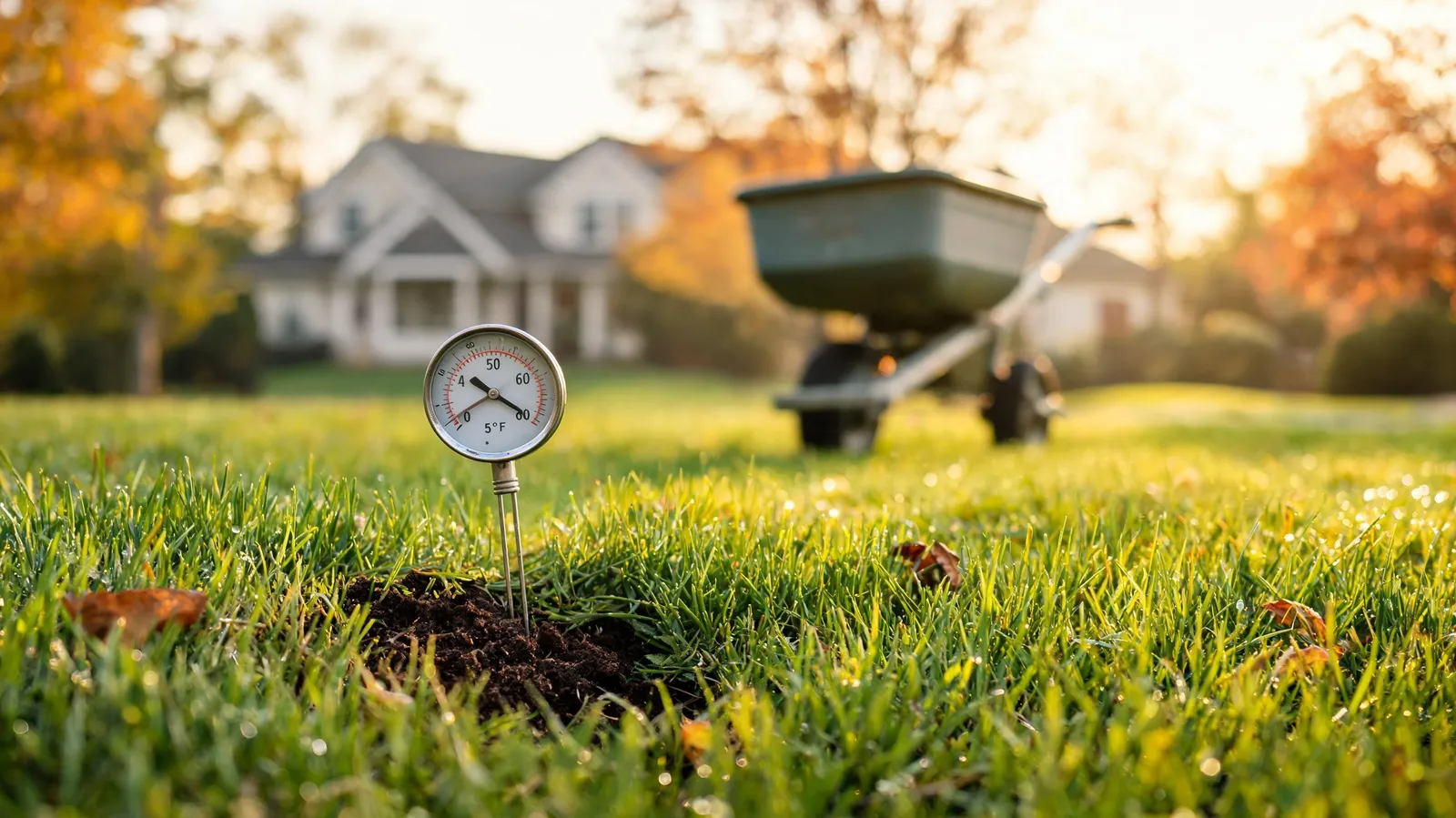
Feed your cool-season lawn when soil temperature hits 50-60F at a 2-inch depth, then feed again before soil drops below 40F. That's the whole game. The calendar lies to you every year because September in Minneapolis and September in Raleigh are two different seasons underground. Soil temperature tells the truth.
Fescue, Kentucky bluegrass, and perennial ryegrass do their best growing in cool soil. Fall is when they recover from summer, thicken up, and bank energy for next spring. Get the nitrogen timing right and you'll see more from one fall feeding than from three spring ones.
You can pull live soil temperature for your ZIP at https://www.lawntide.com/lawn.
What soil temperature is best for the first fall fertilizer?
Apply your first fall feeding when soil temperature sits between 50F and 60F at a 2-inch depth. That window lines up with the point where summer heat has broken, the grass is actively growing again, and roots are pushing hard. Nitrogen applied now goes straight into recovery and tillering.
In most of the cool-season belt this means early to mid September. If you're in Columbus and it's the first week of September with soil around 65F and dropping, you're almost there. Wait for it to settle under 60F so you're not pushing lush top-growth into lingering heat. Grass grown fast in warm soil is weak and disease-prone.
This first feeding does the visible work. Color comes back, thin spots fill, and any late-summer seeding gets a push. Use a standard nitrogen source and follow the label rate.
Can I fertilize and seed at the same time in fall? Yes, and it's a smart combo. A starter fertilizer at seeding gives young grass the nutrients it needs, and the soil temps that suit new seed (55-65F) overlap your first feeding window perfectly.
What soil temperature is best for late-fall fertilizer?
Make your late-fall feeding while soil is still above 40F and the grass is green, even if the blades have stopped growing up top. This is usually 6 weeks after the first feeding. Soil in the 40-50F range is ideal. Below 40F, root uptake slows to a crawl and most of the nitrogen just sits there.
Here's the part people miss. Grass blades quit growing when air turns cold, but roots stay active much longer. As long as soil holds above 40F, the plant keeps pulling nitrogen and storing it as carbohydrates in the crown and roots. That stored energy is what gives you a fast, deep green-up in early spring without a spring feeding.
Time it wrong and you waste money. Put nitrogen down when soil is already at 38F and frozen nights are here, and the roots can't use it. Rain and snowmelt carry it off. Watch the soil temperature trend and catch the window before it closes.
Is late-fall fertilizer the same as winterizer? Mostly, yes. "Winterizer" products are just a late-season feeding, often with a bit more potassium. The timing - soil above 40F, grass still green - matters more than the label on the bag.
Why does fall fertilizer beat spring for fescue and bluegrass?
Fall nitrogen builds the plant. Spring nitrogen mostly builds the mowing pile. In fall, cool-season grass directs energy into roots and crown storage, so your feeding thickens the stand and sets up winter survival. In spring, that same nitrogen drives rapid leaf growth, which means more mowing, more water demand, and a plant that burns through its reserves right before summer stress hits.
University turf programs have pushed fall feeding for cool-season lawns for decades for exactly this reason. A lawn fed well in September and late fall greens up earlier and stronger in spring than one you blast with nitrogen in April - and it does it without the growth surge that leaves grass soft and disease-prone.
If you only fertilize twice a year, make both applications in fall. Skip the spring nitrogen or keep it light.
When should I fertilize by region?
Timing shifts with latitude and elevation, so go by soil temperature first and use these calendar ranges as a backup. The table below shows typical windows for each fall feeding across the cool-season regions.
| Region | First feeding (soil 50-60F) | Late-fall feeding (soil above 40F) |
|---|---|---|
| Northeast | Early-mid September | Late October-mid November |
| Midwest | Early-mid September | Late October-November |
| Pacific Northwest | Mid-late September | November-early December |
| Upper Southeast (transition zone) | Mid-late September | November |
| Southwest (high elevation) | Early September | October-early November |
Note: The Deep South, Florida, Gulf Coast, and most of the low-desert Southwest grow warm-season grasses (Bermuda, zoysia, St. Augustine, centipede). Those lawns go dormant in fall and should not get fall nitrogen - it invites winterkill and disease. This guide is for cool-season lawns only.
Note: High-elevation areas like Denver's foothills or the mountain West cool off weeks ahead of the lowlands at the same latitude. Trust your local soil reading over any calendar date.
Which cool-season grasses respond to fall feeding?
All the common northern grasses benefit from fall nitrogen. If your lawn is any of these, this timing applies:
- Tall fescue
- Fine fescue (creeping red, chewings, hard fescue)
- Kentucky bluegrass
- Perennial ryegrass
- Annual ryegrass (overseeded)
- Bentgrass (lawns are rare, but same rules)
Kentucky bluegrass is the biggest fall-feeding payoff of the bunch. It spreads by rhizomes and uses that stored fall energy to fill bare spots on its own the next spring. Tall fescue won't spread, but a well-fed fescue lawn comes out of winter denser and crowds out weeds before crabgrass season.
How many times should I fertilize in fall?
Two feedings handle most cool-season lawns: one at 50-60F soil and one before soil drops below 40F, spaced about 6 weeks apart. That's enough for a healthy, established stand. Lawns on poor sandy soil, heavily used yards, or new seedings can take a third light feeding in between.
Don't overdo it. More nitrogen past what the grass can store doesn't make a better lawn - it leaches away and can push disease. Follow the rate on the product label, which is set for your bag's nitrogen content and spreader setting.
FAQ
How do I measure soil temperature for fertilizing?
Use a soil thermometer pushed 2 inches into the ground, taken mid-morning for a day's average. Check it a few days running, since one reading after a cold snap can mislead you. If you'd rather skip the probe, LawnTide tracks live soil temperature by ZIP code so you can see the trend without stepping outside.
Is September too early for fall fertilizer up north?
No. In the northern Midwest and Northeast, early September is usually right on time for the first feeding because soil has dropped into the 50-60F range by then. Farther south in the transition zone, you may wait until late September. Let the soil reading decide, not the date.
Can I skip the first fall feeding and just do late fall?
You can, but you'll give up the recovery and thickening that the September feeding provides. The first feeding repairs summer damage while the grass is actively growing; the late-fall feeding stores energy for spring. They do different jobs. If you only get one in, the first one matters more for a thin or damaged lawn.
What happens if soil is already below 40F when I fertilize?
Most of that nitrogen goes to waste. Root uptake nearly stops below 40F, so the fertilizer sits on cold or frozen ground and washes away with rain and snowmelt. If you missed the window, hold off and make it your early-spring feeding instead, applied as the soil warms back through 40F.
Stop guessing the timing — we'll watch your soil for you.
See your live soil temperature and this year's treatment windows for your ZIP, free.
Or get free email alerts — one plain-English email the week each task is due.
Every guide above comes down to your local soil temperature — see the live number and this year's windows for your city: