Guides · By LawnTide · Updated October 23, 2026 · 7 min read
Armyworms in Your Lawn: Warning Signs and the Treatment Window
Armyworms can turn a green lawn brown in 48 to 72 hours. They're not worms at all - they're the caterpillar stage of a drab brown moth, and when a big flight lands and lays eggs, hundreds of larvae hatch and eat everything in their path. The fall armyworm is the one that hammers Southern and transition-zone lawns from late summer into fall. If you catch them in the first day or two, you save your grass. Wait a week and you're looking at bare dirt.
What are armyworms and when do they show up?
Armyworms are the larvae of night-flying moths that migrate north each summer. They show up in the South and transition zone from August through October, feeding hardest when soil temperatures sit in the 70s and 80s. They march across a lawn in a group, which is how they got the name.
The moths don't do the damage. They fly in on storm fronts, drop eggs in fuzzy masses on fences, gutters, flags, and the underside of leaves, and move on. Each mass holds 100 to 200 eggs. The caterpillars hatch within a few days and start small, feeding on the surface where you barely notice them. Then they grow fast. By the time they hit their last larval stage they're over an inch long and eating ten times what they ate as hatchlings. That's when a lawn disappears overnight.
Why does it happen so suddenly? The early larvae feed low on the grass blade and cause almost no visible damage. All the destruction comes in the last three or four days of their life cycle, when the caterpillars are big and hungry. You don't see the slow build - you just wake up to brown.
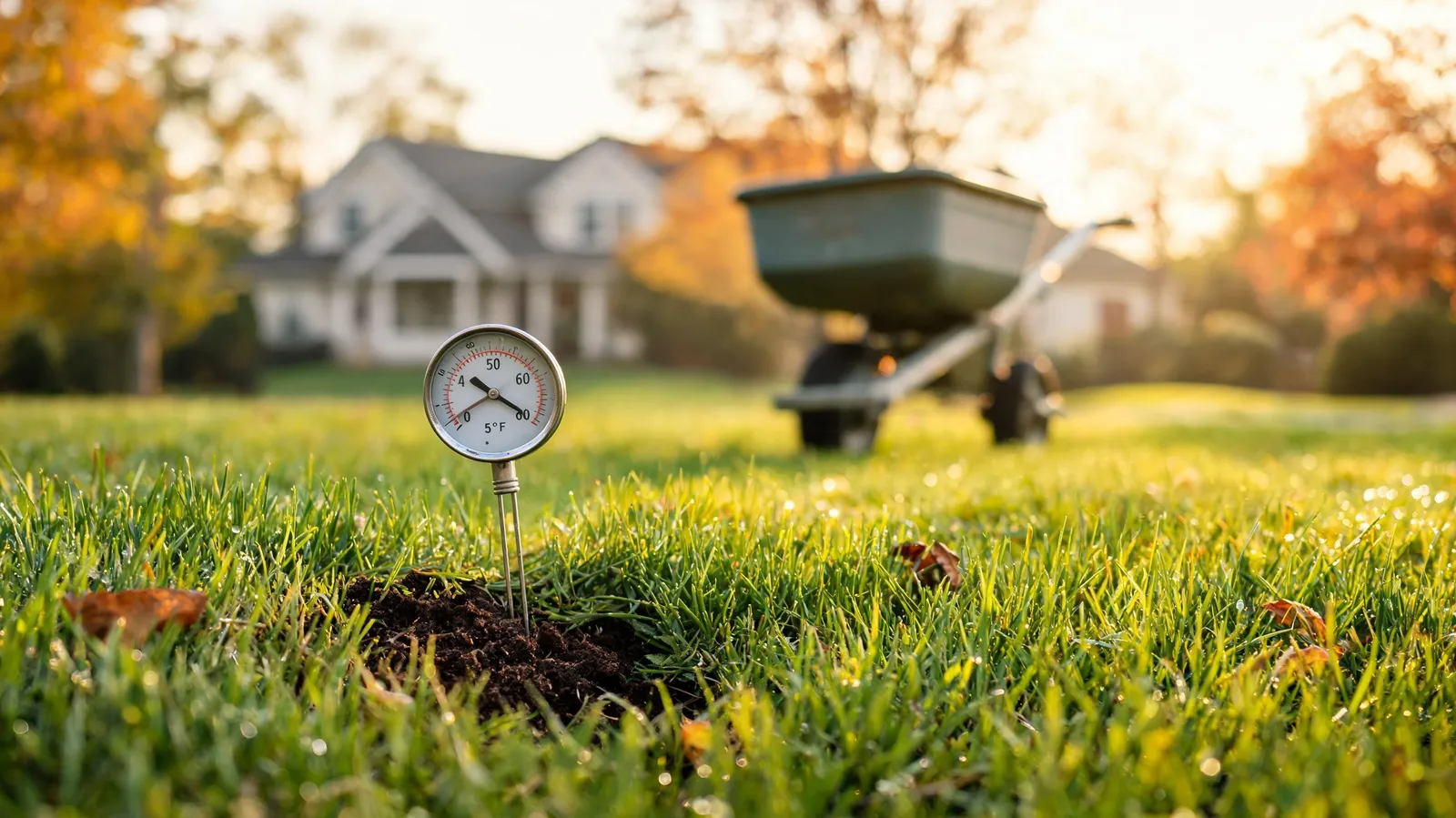
You can check the live soil temperature for your ZIP at https://www.lawntide.com/lawn to know when you're in the risk window. Once your soil is holding in the 70s and you've had warm humid nights, start scouting.
What are the warning signs of armyworms?
Look for sudden brown or thinned patches that spread outward over a day or two, grass blades chewed ragged instead of cut clean, and birds feeding heavily on your lawn. In early morning you may see a shimmer of larvae on the grass, or window-pane damage where caterpillars scraped one side of the blade.
Here's what tips off most homeowners:
- Patches that grow fast. A brown spot that doubles in size overnight is a classic armyworm signature. Fungus spreads slower.
- A flock of birds working one area. Robins, grackles, and starlings pecking the same stretch of lawn are eating caterpillars. Free scouting.
- Chewed, frayed blade tips. Run your hand over the grass. Drought browning leaves blades intact; armyworms leave them shredded and short.
- A visible green stripe down the back of each caterpillar with an upside-down pale Y on the head capsule. That's how you confirm fall armyworm versus other caterpillars.
- The damage "marches" - a clear green edge next to a chewed edge, moving across the yard.
If it's late August in Dallas or Atlanta and a patch browned out since yesterday, assume armyworms until you prove otherwise.
How do you confirm armyworms with a soap flush?
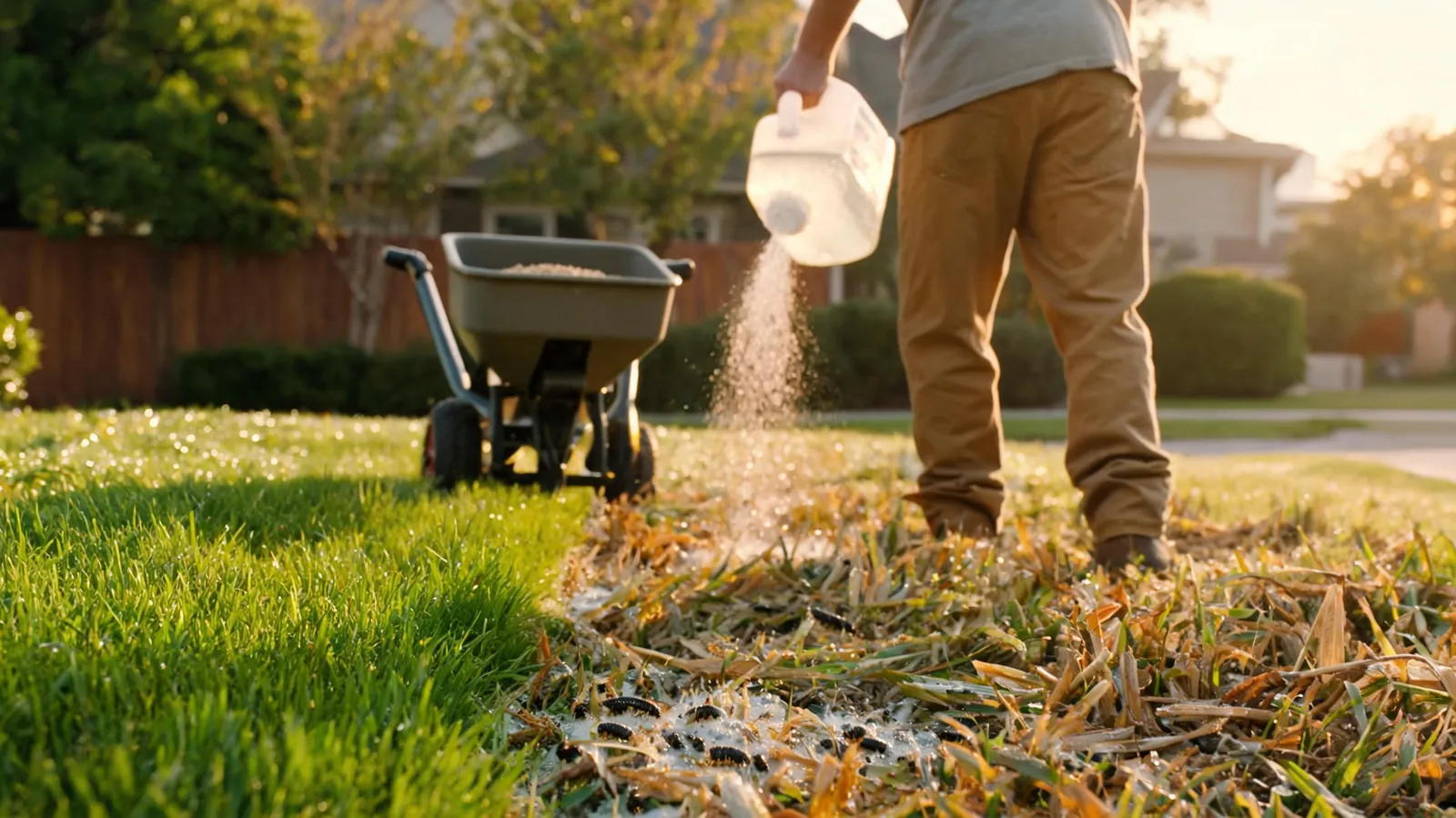
Mix 2 tablespoons of dish soap into 1 gallon of water and pour it evenly over 1 square yard at the edge of a damaged area. Wait about 10 minutes. The soap irritates the larvae and drives them up out of the thatch where you can count them.
Do the flush at the border between green and brown grass - that's where the active feeders are. If you find 3 or more larvae per square foot, treat. Fewer than that, and birds plus natural predators may handle it, but keep scouting daily because the count climbs fast.
Can I just wait and see? Not once the count is high and the larvae are big. Large larvae can strip a lawn in 2 to 3 days, so "wait and see" often means you miss the window entirely. Flush, count, decide the same day.
When is the treatment window, and what do you use?
The window is small - often under a week. Insecticides work best on small larvae, so spray as soon as you confirm 3 or more per square foot. Apply in late afternoon or early evening when caterpillars come up to feed, water lightly only if the label says to, and don't mow for a day or two after.
Two product types cover most homeowners:
- Spinosad - a lower-toxicity option, softer on beneficial insects, good when larvae are still small. Available in ready-to-spray bottles.
- Bifenthrin - a pyrethroid that knocks down larger larvae and gives longer residual protection. Common in granular and liquid hose-end forms.
- Other pyrethroids (lambda-cyhalothrin, permethrin) work similarly to bifenthrin.
- Bt (Bacillus thuringiensis) can work on very small caterpillars but fades fast and misses the big ones.
Follow the label for rates and timing - I'm not giving application amounts here because the product label is the legal, correct source. One treatment usually does it, but flush again two days later to confirm the count dropped.
Note: In Florida and the Gulf Coast you can see multiple generations in a single season. Knocking out one wave doesn't mean you're done - keep scouting into October.
Treatment timing by region
| Region | Peak armyworm risk | Typical soil temp at risk | Notes |
|---|---|---|---|
| Southeast | Aug - Oct | 75-85 F | Highest pressure; multiple waves possible |
| Southwest | July - Sept | 75-90 F | Watch Bermuda lawns in TX, OK |
| Transition zone | Aug - Sept | 70-82 F | Fescue here is at real reseeding risk |
| Midwest | Aug - Sept | 70-80 F | Migrates in some years; scout after storms |
| Northeast | Sept - Oct | 65-78 F | Sporadic; usually late-arriving flights |
| Northwest | Low risk | n/a | Rare; true armyworm outbreaks uncommon |
Note: High-elevation and mountain lawns rarely see damaging numbers because nights cool off too fast for the larvae to develop quickly.
Will your lawn recover after armyworms?
Warm-season grasses almost always bounce back. Bermuda and zoysia regrow from their roots and runners within 2 to 3 weeks once the larvae are gone and you water and feed lightly. Cool-season fescue is the exception - armyworms eat the crown and it doesn't spread, so damaged fescue often needs reseeding.
Here's the grass-by-grass rundown:
- Bermuda - recovers fast from stolons and rhizomes. Keep it watered, apply a light nitrogen feeding, and it greens back up.
- Zoysia - slower than Bermuda but recovers from runners. Be patient.
- Centipede and St. Augustine - usually recover but can be slow; St. Augustine may need plugs in dead spots.
- Tall fescue - bunch grass with no runners. If the crown is eaten, it's dead. Plan to overseed in fall once temps drop.
- Kentucky bluegrass - spreads by rhizomes, so it fills back in better than fescue.
The move after treatment: water deeply, hit it with a light feeding to push recovery, and hold off on herbicides until the grass is actively growing again. For fescue stands that got chewed to the crown, time your reseed for early fall when soil temps slide into the 60s.
FAQ
How fast can armyworms destroy a lawn?
Large larvae can strip a lawn in 2 to 3 days. The damage looks sudden because the caterpillars do almost all their eating in the final days of their larval stage, when they're over an inch long. A lawn that looked fine Friday can be brown by Monday.
Do armyworms come back after you treat them?
A single generation won't return once you've killed it, but new moth flights can lay fresh eggs, especially in the Southeast and Gulf Coast where multiple generations occur in one season. Keep running soap flushes every few days through October. One clean treatment doesn't mean the season is over.
Can I prevent armyworms before they arrive?
You can't stop the moths from flying in, but you can catch the larvae early. Scout after warm, humid nights and storm fronts, especially late August through September. A preventive granular pyrethroid applied when regional reports spike can help, but scouting plus a fast treatment beats blanket spraying.
Is it armyworms or grubs eating my lawn?
Grubs feed on roots underground and cause turf that lifts up like loose carpet. Armyworms feed above ground on the blades and leave chewed, frayed grass. A soap flush brings armyworms to the surface in minutes; grubs you find by peeling back the sod and digging into the soil.
Stop guessing the timing — we'll watch your soil for you.
See your live soil temperature and this year's treatment windows for your ZIP, free.
Or get free email alerts — one plain-English email the week each task is due.
Every guide above comes down to your local soil temperature — see the live number and this year's windows for your city: