Guides · By LawnTide · Updated July 17, 2026 · 8 min read
Soil Temperature vs. Air Temperature: Why Your Lawn Doesn't Care About the Forecast
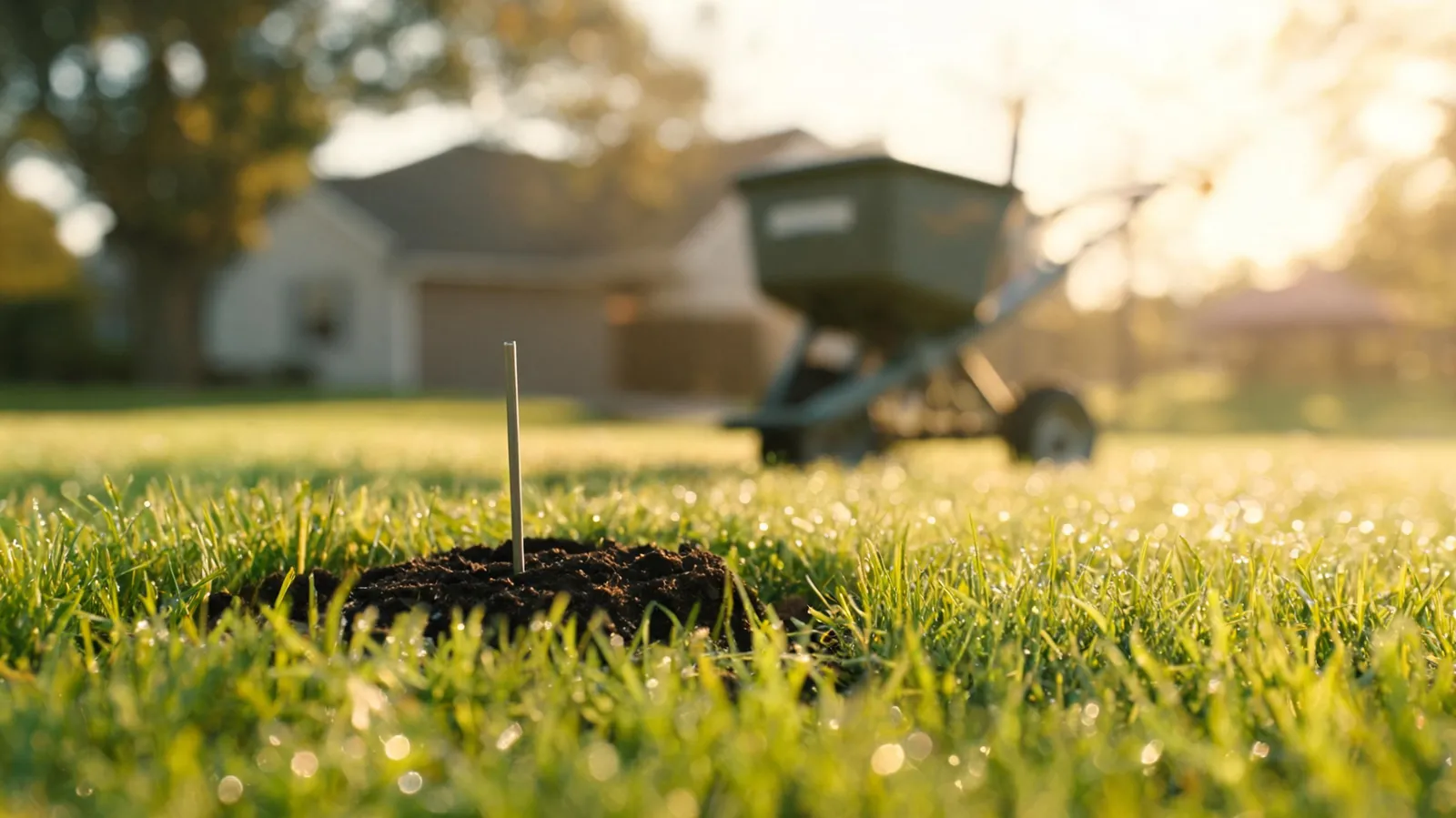
Your grass reads the soil, not the forecast. Roots, seeds, and the insects living in your lawn all respond to soil temperature at the 2-inch depth - and that number lags the air by days or even weeks. That's why a warm week in March fools you into seeding too early, and why calendar-based advice like "fertilize on Memorial Day" misses the mark in half the country.
Learn to think in soil temps and every timing decision gets easier. Here's how it works.
Why does soil temperature matter more than air temperature?
Soil temperature drives biology. Seeds germinate, roots grow, and insects hatch based on how warm the ground is, not how warm the air feels. Air temperature swings 30 degrees between afternoon and dawn. Soil at 2 inches barely moves in a day, so it's a far more reliable trigger.
Think about a typical spring. The air hits 70°F on a sunny Tuesday in early April, and you're tempted to throw down grass seed. But the soil is still sitting at 45°F because it's been cold all month and the ground holds onto that chill. Your seed sits there, does nothing, and half of it rots or gets eaten before the soil catches up weeks later.
The reverse happens in fall. October air feels cool and you assume the growing season is over. Meanwhile the soil is still a cozy 62°F from all that summer heat, which is prime time for cool-season roots to pack on growth. Homeowners who quit in September leave their best month on the table.
Why does soil hold temperature longer than air? Water and mineral content give soil thermal mass. It takes a lot of energy to warm up a few inches of dirt and a lot to cool it back down, so soil averages out the daily ups and downs into a slow, steady trend.
How far behind the air does soil temperature run?
Soil typically lags air temperature by one to three weeks in spring and runs warmer than the air well into fall. The exact gap depends on soil type, moisture, sun exposure, and how deep you measure. Sandy, dry, south-facing ground warms fastest. Heavy clay and shaded areas lag the most.
A few things speed up or slow down the soil:
- Sun exposure - a south-facing front yard can run 5-10°F warmer than a shaded backyard on the same property.
- Soil type - sandy soil warms and cools quickly; clay is slow on both ends.
- Moisture - wet soil warms slower than dry soil because water absorbs heat.
- Thatch and mulch - a heavy thatch layer insulates the surface and delays warming.
This is exactly why your neighbor's crabgrass shows up two weeks before yours even though you're on the same street. Different soil, different timing.
Why is 2 inches the depth that matters?
Measure at 2 inches because that's the zone where most grass seeds germinate and where surface-feeding insects live. University turf programs use the top 2 inches as the standard reference for lawn thresholds. Some pests and deeper roots respond to the 4-inch reading, but 2 inches is your everyday number.
Surface soil temperature is too jumpy - it spikes in direct sun and crashes overnight. Go too deep and you're reading a number that doesn't reflect what's happening in the seed and root zone. Two inches is the sweet spot that stays stable while still tracking what your lawn actually experiences.
If you're checking with a probe thermometer, take the reading in the morning for a daily low-ish baseline, and average a few days rather than reacting to one number. Most threshold rules require the soil to hold a temperature for several consecutive days, not just touch it once.
You don't need a probe, though. Live soil temperature for any ZIP code is at lawntide.com/lawn, pulled from local data so you can skip the guesswork.
What soil temperatures trigger the big lawn tasks?
Every major lawn job has a soil temperature window. Miss it and the task either fails or wastes money. These thresholds come from university turf programs and hold up across most of the country.
| Task | Soil temp at 2" | What's happening |
|---|---|---|
| Apply pre-emergent for crabgrass | Before soil hits 55°F | Crabgrass seed germinates at 55°F; the barrier must be down first |
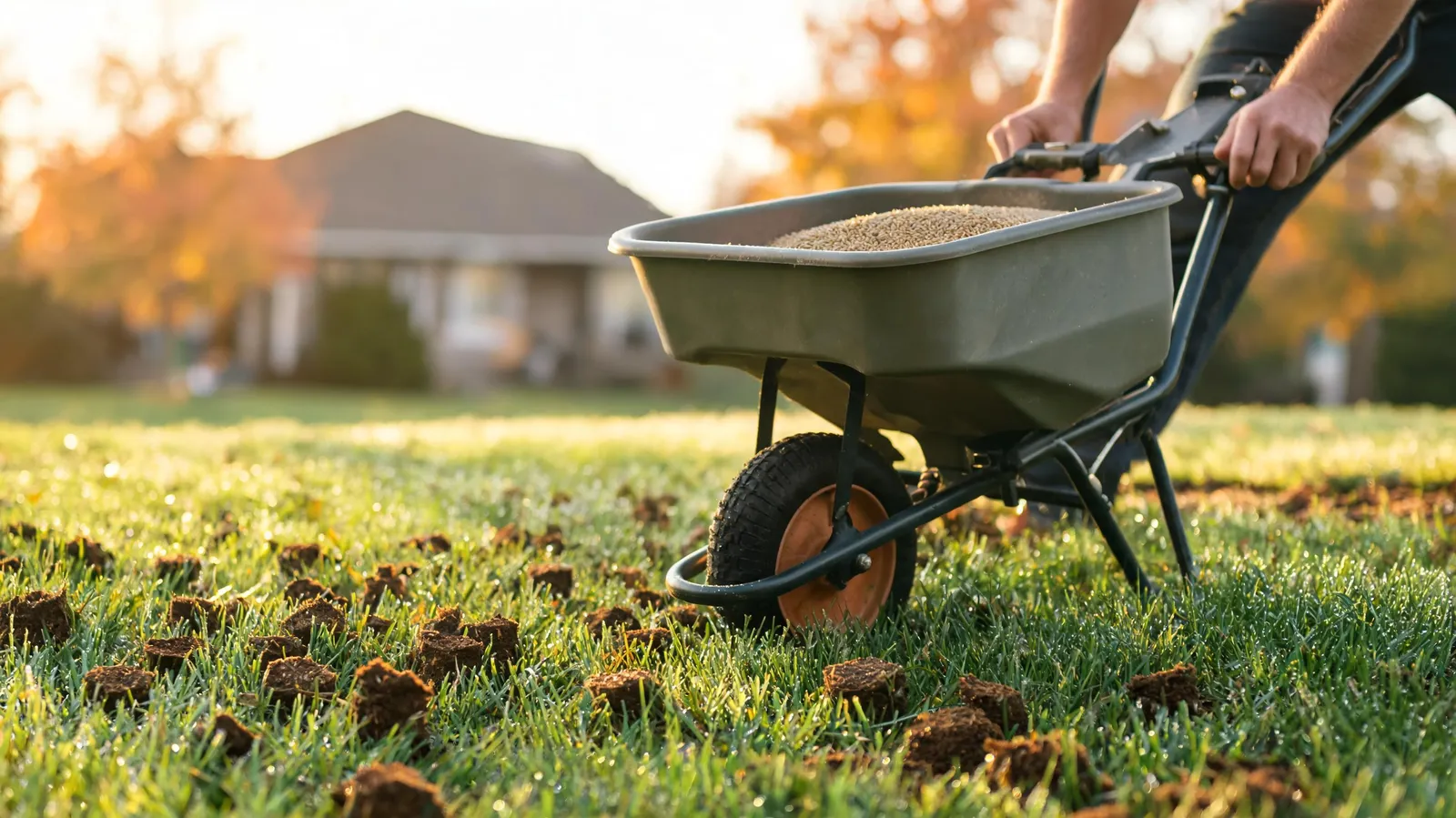
| Seed cool-season grass | 50–65°F | Optimal germination for fescue, rye, bluegrass |
| Seed warm-season grass | 65–70°F+ | Bermuda, zoysia need warmth to sprout |
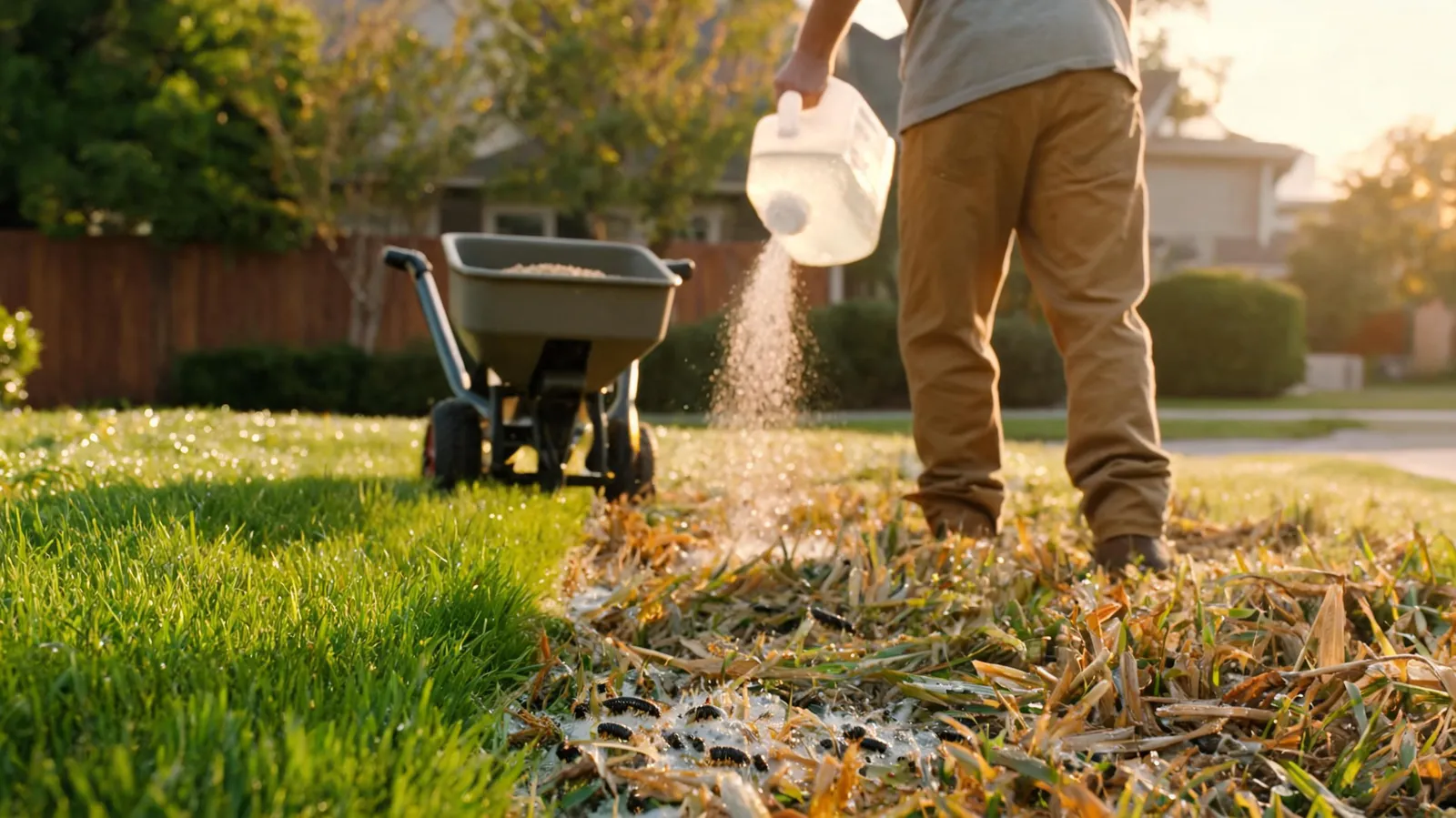
| Apply grub control (preventive) | Before soil hits 60°F+ | Beetle eggs hatch and larvae feed once soil warms |
| Warm-season green-up | 65°F | Bermuda and zoysia break dormancy |
| Cool-season fall feeding | Soil still 55–65°F | Roots grow hard even as air cools |
Is 55°F really the crabgrass number? Close enough to plan around. Crabgrass germinates when soil holds around 55°F at 2 inches for several consecutive days, so get pre-emergent down while soil is still in the low 50s. Once you see crabgrass sprouting, the pre-emergent window has closed.
For grubs, the trigger is the soil warming past 60°F, which is when Japanese beetle and similar larvae become active near the surface. Follow the product label for exact timing and rates - preventive and curative products go down at different points in the cycle.
How does this play out region by region?
Soil hits these thresholds at wildly different times across the country, which is why one national calendar can't work. Here's roughly when soil crosses 55°F in spring - the crabgrass line - by region.
- Southeast (Atlanta, Charlotte): soil often crosses 55°F by mid-to-late February. Pre-emergent goes down early, sometimes while northern lawns are under snow.
- Southwest (Phoenix, Dallas): warm soil comes early too, late February into March, and stays hot long into fall.
- Midwest (Columbus, Chicago): soil usually reaches 55°F in April. If you're in Columbus and it's early April, watch the reading daily.
- Northeast (Boston, Philadelphia): mid-to-late April for most, later at elevation and up north.
- Northwest (Portland, Seattle): a slow, cool spring means soil can lag into April despite mild air; wet clay soils hold the chill.
Note: Florida, coastal Southern California, and Hawaii rarely see soil drop into the germination-blocking cold zone, so timing there runs on a different logic - pre-emergents may need split applications and warm-season rules dominate year-round. High-elevation lawns in the Rockies and Sierra run weeks behind the lowland cities in the same state.
Why does calendar-based advice fail?
Calendar advice fails because a date can't know what your soil is doing. "Apply pre-emergent in March" is too late for Atlanta and too early for Minneapolis. The same week can be perfect in one ZIP and a total waste in the next county over with different soil and elevation.
A warm February in the Midwest can pull soil temps up early, blowing past the usual timeline. A cold, wet April can hold soil down long after the calendar says spring. Old rules like "fertilize on the holidays" were rough averages from a time before anyone could check live soil data. They're better than nothing, but they cost you the precision that actually makes a lawn thrive.
Watch the soil and you stop guessing. You put pre-emergent down the week before crabgrass wakes up, seed when germination is fastest, and treat grubs before they feed - every time, no matter what the forecast says.
FAQ
How do I measure soil temperature at home?
Use a soil or compost thermometer with a metal probe. Push it 2 inches into the ground, wait a minute for the reading to settle, and check it in a few spots around the yard. Take readings in the morning and average several days, since most lawn thresholds require soil to hold a temperature for consecutive days. If you'd rather skip the probe, LawnTide shows live soil temperature by ZIP.
Why does my south-facing yard green up before the back?
Sun exposure. A south-facing area gets more direct light and warms faster, so its soil can run 5-10°F warmer than a shaded backyard on the same property. That's normal. It also means the sunny areas hit germination and pest thresholds first, so you may treat different parts of the lawn on slightly different schedules.
Is air temperature ever useful for lawn timing?
Yes, as an early signal. Sustained warm air pulls soil temperatures up over the following days, so a run of warm days tells you the soil trigger is coming. Just don't act on air temperature alone - wait for the soil to actually cross the threshold before you seed, treat, or feed.
Does soil temperature matter in fall too?
Absolutely. In fall the soil runs warmer than the cooling air, which keeps cool-season roots growing strong into October and even November in much of the country. That's why fall is the best time to seed and feed cool-season lawns - the soil stays in the 50s and low 60s long after the air turns crisp.
Stop guessing the timing — we'll watch your soil for you.
See your live soil temperature and this year's treatment windows for your ZIP, free.
Or get free email alerts — one plain-English email the week each task is due.
Every guide above comes down to your local soil temperature — see the live number and this year's windows for your city: