
Guides · By LawnTide · Updated July 27, 2026 · 7 min read
When to Apply Fall Pre-Emergent in North Carolina
Fall pre-emergent in North Carolina goes down when soil temperature falls through 70°F at a 2-inch depth. In most of the Piedmont that's mid-September. On the coast you've got until early October. Up in the mountains it comes sooner - late August into early September. Miss that window and poa annua wins.
Here's the catch that trips up half the state: North Carolina sits in the transition zone. That means the fall pre-emergent window and the fall fescue overseeding window land at the exact same time. And a standard pre-emergent will block your fescue seed just as dead as it blocks the weeds. You have to pick one. Below is how to make that call.
When should you apply fall pre-emergent in North Carolina?
Apply when the 2-inch soil temperature drops to 70°F and is trending down - not the air temp, the soil. That happens mid-September across the Piedmont, late August to early September in the mountains, and early October along the coast. Getting the seed in the ground before it cracks below 70°F is what stops fall weeds.
Poa annua (annual bluegrass) and its cool-season buddies germinate when soil cools in fall, mirroring how crabgrass germinates when soil warms in spring. University turf programs across the transition zone peg 70°F as the trigger. Once soil is at 70 and dropping, poa is about to pop. Your barrier needs to already be there.
Don't guess off the calendar. A warm September can hold soil above 70 for an extra ten days, and a cold snap can pull it early. Check the live 2-inch reading for your ZIP at https://www.lawntide.com/lawn and time it off the actual number.
Is October too late for fall pre-emergent in NC?
On the coast, early October is fine. In the Piedmont and mountains, October is usually late - soil has already dropped below 70 and poa has started germinating. If you're past the window, a post-emergent aimed at young poa is your fallback.
Do you apply pre-emergent or overseed fescue - you can't do both
You pick one. A standard pre-emergent creates a chemical barrier that stops any seed from establishing, and fescue seed is seed. Lay down prodiamine or dithiopyr and then throw fescue on top and you've wasted the seed. Same window, opposite goals.
Here's how to decide. If you run tall fescue and your lawn thinned out over the summer - and NC fescue almost always thins after July heat and brown patch - overseeding wins. A thick, healthy fescue stand is your best weed control anyway. Skip the pre-emergent this fall, seed in September, and go after any poa with a post-emergent later or handle it next fall.
If your fescue is thick and full, or you've got a warm-season lawn (bermuda, zoysia, centipede) going dormant, apply the pre-emergent. Warm-season grass isn't growing from seed in fall, so there's nothing to protect - just block the poa and winter weeds.
What if I want to seed AND control weeds? Use mesotrione (the active in Tenacity). It's labeled to go down at seeding and controls a range of weeds while new fescue establishes. Follow the label rates. It's the one legitimate way to do both jobs in the same pass.
What weeds does fall pre-emergent control in North Carolina?
Fall pre-emergent targets the winter annuals that germinate as soil cools. The big one is annual bluegrass, but a fall barrier catches a whole slate of cool-season weeds before they ever show.
- Poa annua (annual bluegrass) - the main target, germinates at 70°F falling
- Common chickweed
- Henbit
- Purple deadnettle
- Hairy bittercress
- Annual ryegrass
- Corn speedwell
Most of these sprout in early to mid fall, sit low through winter, and explode in late winter and early spring. That February lawn full of little white or purple flowers? Those seeds germinated back in October. A fall barrier is the only clean way to stop them.
Piedmont vs mountains vs coast - NC timing by region
North Carolina runs from beach to 6,000-foot peaks, so soil cools on very different schedules. West cools first because of elevation. The coast cools last because the ocean holds heat. The Piedmont sits in the middle.
| Region | Example cities | Typical fall pre-emergent window | Soil hits 70°F |
|---|---|---|---|
| Mountains | Asheville, Boone, Waynesville | Late Aug - early Sept | Earliest |
| Piedmont | Charlotte, Raleigh, Greensboro, Durham | Mid - late Sept | Mid |
| Coastal Plain / Coast | Wilmington, Jacksonville, Outer Banks | Late Sept - early Oct | Latest |
Note: High elevation in the mountains (Boone, Beech Mountain, anything above ~3,500 ft) can cool a full two weeks ahead of Asheville. If you're up top, treat late August as your outside edge and watch the soil reading closely.
The same regional split holds nationwide - each cools on its own clock:
- Northeast: soil hits 70 falling by late August to mid-September
- Southeast: early September inland, into October near the Gulf and Atlantic coasts
- Midwest: late August through early September
- Northwest: early to mid-September west of the Cascades, earlier in the interior
- Southwest: October in the low desert, where soil stays warm longest
Since all of North Carolina falls in the Southeast/transition band, your realistic range is late August to early October depending on where you stand. Don't apply on your Charlotte cousin's schedule if you're in Wilmington - you're two to three weeks behind him.
How do you actually apply it and water it in?
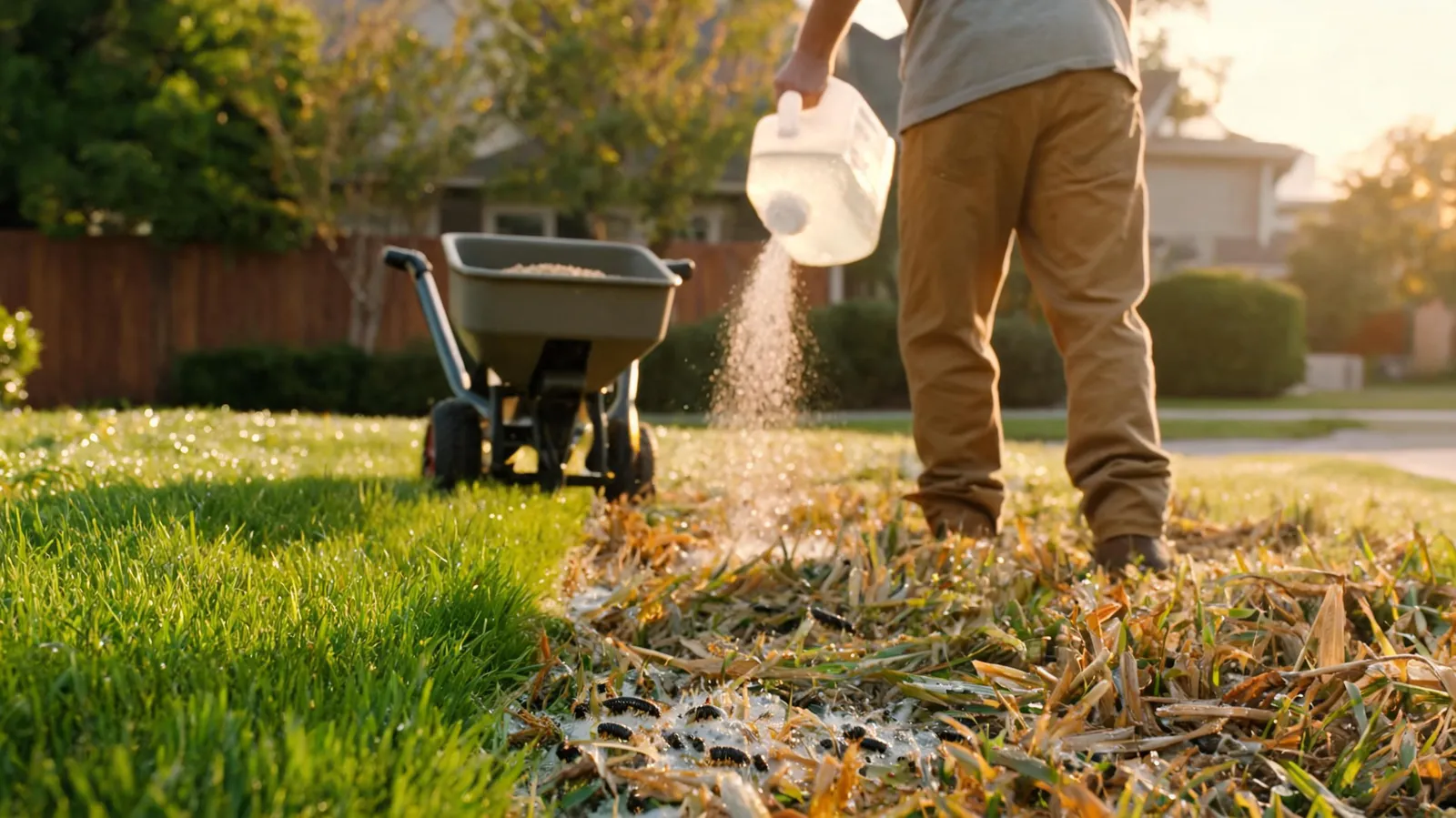
Spread the pre-emergent evenly, then water it in with about a half-inch of irrigation within 24 hours. The chemical has to move off the surface and into the top layer of soil to form the barrier. Dry granules sitting on top of dry ground do nothing.
Granular products go down with a calibrated spreader; liquids go through a sprayer. Either works - use whatever you can apply evenly, because gaps in coverage are gaps poa walks right through. Always follow the label rate for your product and your grass type; some pre-emergents can injure certain warm-season grasses at the wrong rate.
One more thing on the split application question. Poa germinates over a stretch of weeks, not one day. Many NC lawns benefit from a second application about 8 to 10 weeks after the first to keep the barrier intact through the whole germination window. Check your label - not every product allows a fall follow-up.
FAQ
Can I overseed fescue after applying fall pre-emergent?
Not with a standard pre-emergent. Products like prodiamine and dithiopyr block seed for two to four months, so any fescue you sow will fail to establish. If you already applied one, wait until spring or the following fall to seed. To seed and control weeds together this fall, use a mesotrione product labeled for seeding.
What soil temperature do I need for fall pre-emergent in NC?
Apply when the 2-inch soil temperature falls to 70°F and is trending down. That's the point when poa annua and other winter annuals begin germinating. Watch the trend, not one warm afternoon - you want the barrier in place before soil settles below 70. Live readings by ZIP are at lawntide.com/lawn.
Will fall pre-emergent stop crabgrass?
No. Crabgrass is a summer annual that germinates in spring when soil warms past 55°F, so a fall application will be long expired before crabgrass season. Fall pre-emergent targets winter annuals like poa annua, chickweed, and henbit. For crabgrass, apply a separate pre-emergent in late winter to early spring.
Is it too late to apply pre-emergent in November in North Carolina?
Usually yes. By November, soil across the Piedmont and mountains has dropped well below 70°F and poa has already germinated - a pre-emergent won't kill weeds that are already up. The coast may still have a narrow window in a warm year. If weeds have emerged, switch to a post-emergent labeled for poa annua.
Stop guessing the timing — we'll watch your soil for you.
See your live soil temperature and this year's treatment windows for your ZIP, free.
Or get free email alerts — one plain-English email the week each task is due.


Every guide above comes down to your local soil temperature — see the live number and this year's windows for your city: