Guides · By LawnTide · Updated July 31, 2026 · 7 min read
Dethatch, Aerate, Overseed, Pre-Emergent: The Right Order (and Soil Temps for Each)
The right order is dethatch, then aerate, then overseed - and pre-emergent goes dead last, if it goes down at all. That's the whole answer. But the reason pre-emergent lands at the bottom of the list is where people wreck their fall renovation, so let's walk through each step, the soil temperature that triggers it, and the one conflict that ruins more lawns than any other.
Get the sequence wrong and you either bury your new seed under a chemical barrier that stops it from sprouting, or you aerate after seeding and yank half your seedlings out of the ground. Order matters here as much as timing.
What's the correct order to dethatch, aerate, overseed, and apply pre-emergent?
Dethatch first, aerate second, overseed third, and apply pre-emergent last - or skip pre-emergent entirely if you seeded this fall. Each step preps the soil for the next. Doing them out of order undoes the work you just finished.
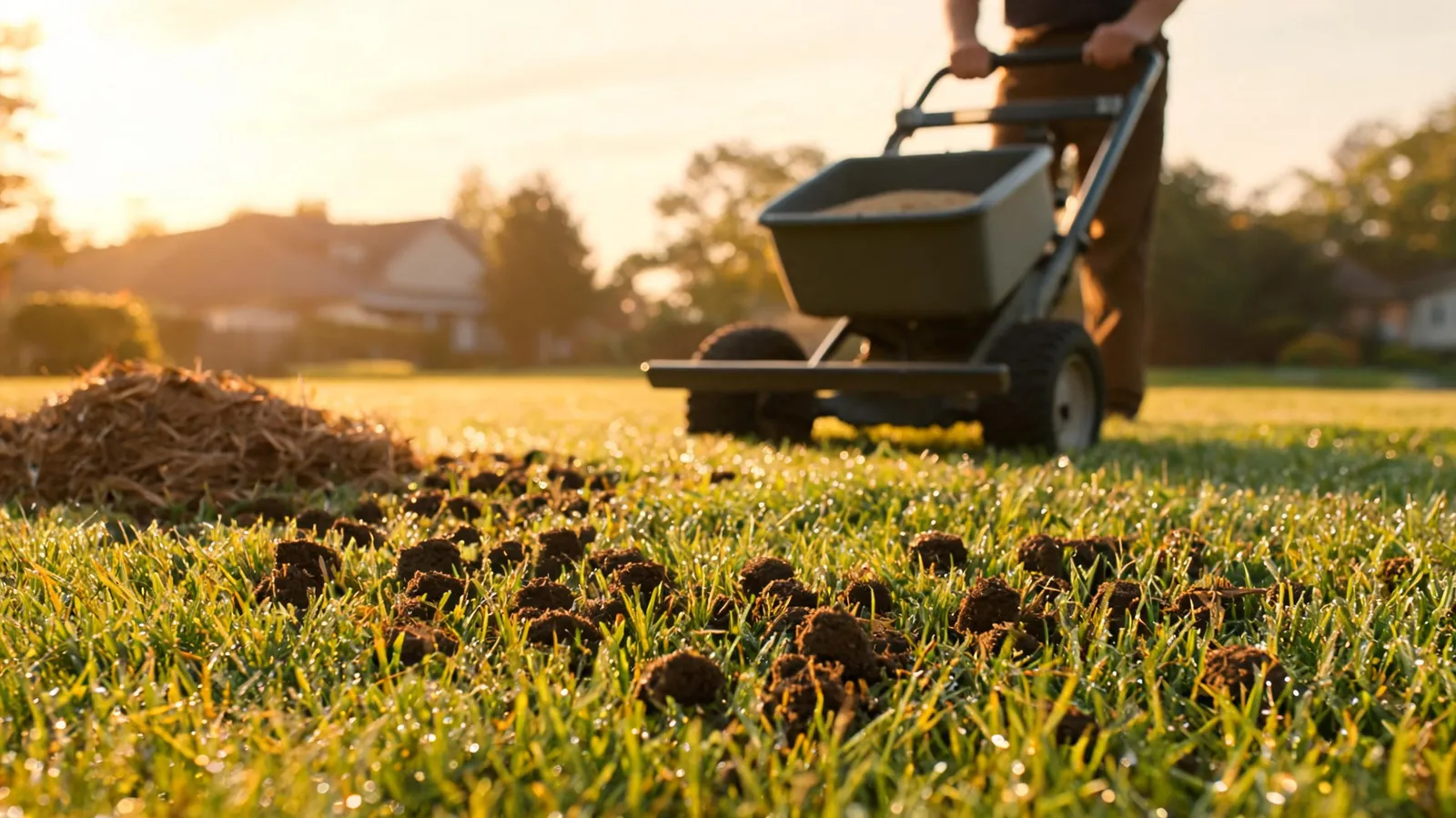
Here's the logic. Dethatching rips out the dead mat sitting between your grass and the soil. You want that gone before you aerate, so the aerator pulls clean soil plugs instead of chewing through thatch. Then you aerate to open the ground and relieve compaction. Then you drop seed onto that freshly opened, exposed soil - seed-to-soil contact is the entire game with overseeding. Pre-emergent comes last because it does the exact opposite of what seed needs: it stops germination cold.
Can I aerate and overseed on the same day? Yes, and you should. Aerate first, then broadcast seed immediately so it drops into the holes and the loosened surface. The plug holes are perfect little germination pockets.
What soil temperature does each step need?
Each task has its own window, and soil temperature runs the schedule - not the calendar. Dethatching and aerating happen when the grass is actively growing so it recovers. Overseeding needs soil in the 50-65F range. Pre-emergent timing depends on which weed you're targeting.
Check your live soil temperature by ZIP at lawntide.com/lawn before you start anything. Air temperature lies. Soil is what the seed and the roots actually feel.
| Task | Soil temp trigger | Typical fall window |
|---|---|---|
| Dethatch | 55-65F, grass actively growing | Late Aug - mid Sept |
| Aerate | Soil moist, 50-65F | Late Aug - Sept |
| Overseed (cool-season) | 50-65F, holding | Late Aug - Sept |
| Fall pre-emergent (Poa annua) | 70F and falling | Late Aug - early Oct |
Cool-season seed - fescue, ryegrass, bluegrass - germinates best when soil sits between 50 and 65F. University turf programs put the sweet spot right around 60F. That's usually late August into September across most of the country. Warm-season lawns don't overseed for permanent turf; they aerate in late spring instead.
Why does pre-emergent conflict with overseeding?
Pre-emergent herbicide creates a chemical barrier in the top layer of soil that blocks seeds from germinating. It can't tell your grass seed from crabgrass. That barrier lasts 8 to 16 weeks depending on the product, which means any seed you plant into treated soil simply won't come up.
This is the single biggest mistake in fall lawn work. Someone dethatches, aerates, overseeds, then "finishes the job" with a pre-emergent to keep weeds out over winter. Three weeks later they're staring at bare dirt wondering why nothing sprouted. The pre-emergent worked exactly as designed - it just worked on the grass seed too.
So you pick one. Either you overseed this fall and skip pre-emergent, or you apply pre-emergent and don't seed until the barrier breaks down next season.
How long after pre-emergent can I seed? Read the label, but plan on 8-16 weeks minimum before your seed will germinate reliably. A standard spring pre-emergent applied in March generally clears in time for a late-August fall seeding. That's why fall renovation and spring crabgrass prevention fit together in one calendar year without fighting.
What if I already put down pre-emergent this spring? You're probably fine to seed in fall. Most spring applications have degraded by late summer. If you doubled up or applied a long-residual product in June, wait longer or do a soil check with your extension office.
The mesotrione exception
There's one starter product built around mesotrione that you can use at seeding time. It suppresses certain broadleaf and grassy weeds while cool-season grass seed still germinates through it. It's the only pre-emergent-type chemistry that plays nice with new seed, and even then it's specific to a few grass types. Check the label against your seed before you buy it. Every other pre-emergent stays off a freshly seeded lawn.
Do I need to dethatch and aerate every year?
No. Dethatch only when the thatch layer tops 1/2 inch - dig a small plug and measure the brown spongy layer between green grass and soil. Aerate every year or two if your soil is compacted or heavy clay. Sandy, loose soil needs it far less often.
A quick way to check thatch: press your finger into the lawn. If it feels springy and your finger doesn't reach soil, you've got a mat worth removing. Under 1/2 inch is healthy and actually protects roots. Over 3/4 inch is choking your lawn and holding water off the soil.
Core aeration beats spike aeration. A core aerator pulls actual plugs of soil out and leaves holes; a spike unit just pokes and can make compaction worse by pressing soil sideways. Rent the core machine.
Here's the full renovation checklist in order:
- Mow low - drop to about 1.5-2 inches so seed reaches soil
- Dethatch - power rake or dethatch blade, then rake up the debris
- Aerate - core aerator, two passes in different directions on bad spots
- Spread seed - use the seeding rate on the bag, not a guess
- Topdress (optional) - thin layer of compost for seed-to-soil contact
- Starter fertilizer - high-phosphorus blend labeled for new seed
- Water - keep the top inch moist, light and frequent until germination
- Skip the pre-emergent - until next spring, after seedlings mature
When should each region tackle fall renovation?
Cool-season renovation follows soil temperature dropping through the 65F line in late summer. That happens at different times across the country, so the calendar shifts by region. The goal everywhere is the same: get seed down with 6-plus weeks of growing weather before frost.
- Northeast (Boston, Philly): late August into mid-September. Soil hits the 60s as nights cool.
- Midwest (Columbus, Chicago, Minneapolis): late August through September. Labor Day weekend is the classic seeding target.
- Northwest (Portland, Seattle): September into early October - mild falls stretch the window later.
- Southeast transition zone (Nashville, Raleigh): September, once the summer heat finally breaks.
- Southwest high desert and cool zones (Denver, Albuquerque foothills): late August to mid-September; elevation cools soil fast.
Note: Deep South and coastal Southeast (Florida, south Georgia, Gulf Coast) run warm-season grass - Bermuda, St. Augustine, Zoysia - which you don't fall-overseed for permanent turf. You aerate those lawns in late spring when soil hits 65F and the grass is greening up. Some folks overseed with annual ryegrass for winter color, but that's temporary and comes out in spring.
If you're in Columbus and it's Labor Day weekend, you're right on time. If you're in Seattle, you've got until early October and no reason to rush.
FAQ
Can I overseed without aerating first?
You can, but germination drops off. Seed needs contact with bare soil, and an un-aerated lawn has grass and thatch blocking most of the seed from ever reaching dirt. If you skip aeration, at least dethatch and rake hard to expose soil, then topdress lightly to bury the seed. Aeration just does it better.
How long after overseeding can I put down pre-emergent?
Wait until your new grass has been mowed at least two to four times and is well established - usually the following spring. Applying pre-emergent to seedlings can damage immature roots even after they've sprouted. Fall-seeded lawns get their first pre-emergent the next spring at the 55F soil temperature mark for crabgrass.
Should I fertilize when I overseed?
Yes. Use a starter fertilizer labeled for new seed - it's higher in phosphorus to push root development. Apply it at seeding time following the bag rate. Skip your regular high-nitrogen lawn fertilizer until the new grass is established, since heavy nitrogen pushes top growth before roots are ready.
What's the difference between dethatching and aerating?
Dethatching removes the dead mat of organic material sitting on top of the soil. Aerating pulls plugs out of the soil itself to relieve compaction and open air channels. They solve different problems, and most renovation projects benefit from both - dethatch first to clear the surface, then aerate the exposed soil underneath.
Stop guessing the timing — we'll watch your soil for you.
See your live soil temperature and this year's treatment windows for your ZIP, free.
Or get free email alerts — one plain-English email the week each task is due.

Every guide above comes down to your local soil temperature — see the live number and this year's windows for your city: