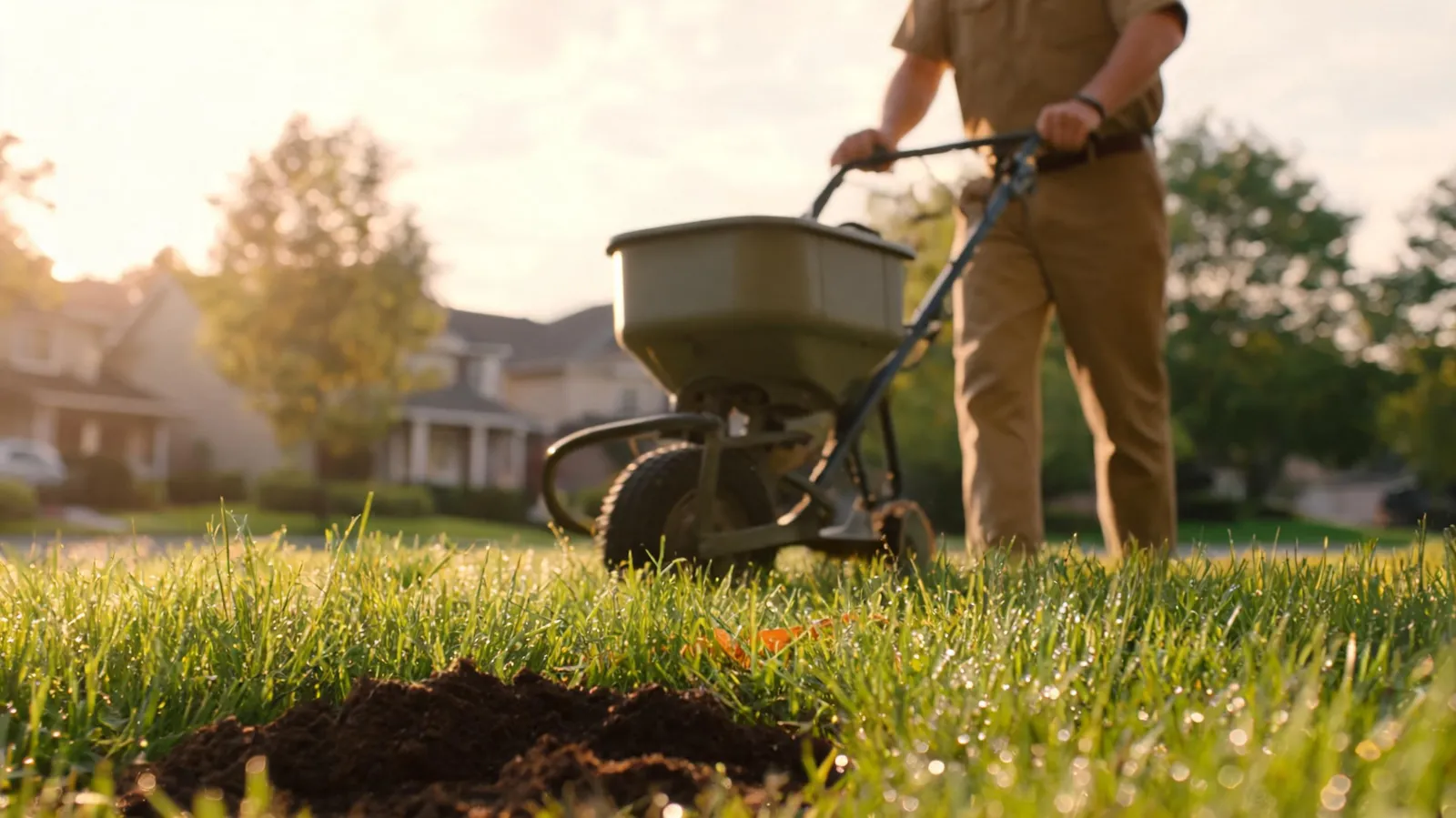
Guides · By LawnTide · Updated September 4, 2026 · 6 min read
When to Apply Grub Preventer: The 60–70°F Soil Rule
Put grub preventer down when your soil temperature at 2 inches climbs into the 60–70°F range. That's the window when Japanese beetles and other adults start flying and laying eggs, and a preventer sitting in the soil is what kills the young grubs as they hatch. Miss it by a month and you're buying the wrong product.
Grub preventers aren't rescue treatments. They're insurance you apply before the damage starts. Get the timing right and one application carries you through the whole grub season.
What soil temperature triggers grub preventer season?
Start watching when soil at 2 inches reaches 60°F and hold your application to the 60–70°F band. This is when adult beetles emerge and begin laying eggs in turf. The preventer needs to be in place before those eggs hatch into feeding grubs.
Air temperature lies to you in spring. A warm afternoon means nothing if the ground is still cold. Soil temp is what the beetles respond to, so that's the number that matters. University turf programs peg beetle flight and egg-laying to that 60–70°F soil range across most of the country.
You can pull the live soil temperature for your exact ZIP at https://www.lawntide.com/lawn instead of guessing off the calendar.
Do I measure morning or afternoon soil temp? Use a rolling average, not a single reading. One 65°F afternoon spike doesn't count. You want several consecutive days holding in the 60s at 2 inches deep.
Chlorantraniliprole vs imidacloprid: which goes down when?
The two main preventer chemistries have different timing. Chlorantraniliprole is the early bird - apply it May through June, well ahead of egg hatch. Imidacloprid is the standard preventer, best applied June through July, timed closer to peak egg-laying and hatch.
Chlorantraniliprole moves slowly in the soil and has a long residual, so you can put it down early and it'll still be active when grubs hatch weeks later. It's also the gentler option for pollinators when applied before bloom. That early flexibility is why a lot of pros reach for it.
Imidacloprid is cheaper and everywhere, but it has a shorter effective window. Put it down too early and it can break down before the grubs show up. June into July hits the timing right in most regions.
Common grub preventer active ingredients:
- Chlorantraniliprole - earliest application, May–June, long residual
- Imidacloprid - standard preventer, June–July
- Clothianidin - similar timing to imidacloprid, June–July
- Thiamethoxam - June–July, another neonicotinoid option
All of these target young grubs. None of them reliably kill the big third-instar grubs you find in fall - that's a different job.
When do I apply grub preventer in my region?
Soil warms south to north and low to high, so a Georgia lawn hits the window a month or more before a Minnesota lawn. Match your application to when soil crosses 60°F, not to a fixed date. The table gives you a starting range by region.
| Region | Chlorantraniliprole (early) | Imidacloprid (standard) | Soil hits 60°F |
|---|---|---|---|
| Southeast | April–May | May–June | Early–mid April |
| Southwest | April–May | May–June | Mid April |
| Midwest | Late May–June | June–July | Mid–late May |
| Northeast | Late May–June | June–July | Late May |
| Northwest | June | June–July | Late May–June |
Note: In Florida and the Gulf Coast, grub pressure runs on a longer, warmer schedule and mole crickets often matter more than grubs - check local extension timing. At high elevation in the Rockies, soil can stay under 60°F into mid-June, so push everything back accordingly.
Is Memorial Day a good rule of thumb? For much of the Midwest and Northeast, yes. If you're in Columbus or Chicago and it's late May, you're right in the chlorantraniliprole window and a couple weeks ahead of imidacloprid timing.
How do I apply it so it actually works?
Water it in. A grub preventer sitting on top of the thatch does nothing - it has to move down into the root zone where eggs hatch. Apply, then irrigate with about 0.5 inch of water within 24 hours to carry the active ingredient into the soil.
Granular products are the easiest to spread evenly with a broadcast spreader. Follow the label rate exactly - I'm not giving you numbers here because they vary by product and the label is the legal, tested rate. Overapplying wastes money and won't kill grubs any deader.
Mow before you apply so the granules reach the soil surface instead of catching on tall blades. And don't apply right before heavy rain that'll pond and run off - you want a controlled half inch, not a flood.
What happens if I apply grub preventer too late?
Too late means the grubs have already hatched and grown, and preventers barely touch large grubs. By August and September the grubs are big, feeding hard on roots, and a preventer just won't work. At that point you've wasted the application.
Watch for these too-late symptoms:
- Spongy turf that pulls up like carpet - roots are chewed off, so the sod lifts with no resistance
- Irregular brown patches in late summer that don't green up with water
- Skunks, raccoons, or birds tearing up the lawn - they're digging for grubs, which means you already have them
- Wilting despite good moisture - damaged roots can't take up water
If you see any of that, stop reaching for a preventer. You need a curative product with a fast-acting ingredient like carbaryl or trichlorfon, applied and watered in the same way. Curatives kill existing grubs; preventers stop next season's. Different tools.
Can I skip preventer if I've never had grubs? Plenty of lawns never need it. Preventer is worth it if you've had grub damage before, if neighbors are fighting them, or if you see clouds of Japanese beetles in July. No history and no beetles? You can watch and treat curatively only if damage shows.
FAQ
How long does grub preventer last in the soil?
Chlorantraniliprole can stay active for up to four months, which is why you can apply it early and still get hatch-time control. Imidacloprid and the other neonicotinoids have a shorter window, generally a few months, which is why they go down closer to egg-laying in June and July. One well-timed application covers the season.
Can I apply grub preventer and fertilizer at the same time?
Yes, and many products combine the two. A June feeding pairs naturally with an imidacloprid preventer. Just make sure the timing works for both - don't apply a preventer months early only because it's bundled with a fertilizer you wanted to use in April. Timing the grub control right takes priority.
What if I already put grub preventer down in April?
April is early for most of the country, and imidacloprid especially may break down before grubs hatch in July. If you used chlorantraniliprole, its long residual likely still covers you. If you used a shorter-lived neonicotinoid that early, scout for grubs in late summer and be ready to treat curatively if damage appears.
Do grub preventers kill grubs I already have?
No. Preventers target young, newly hatched grubs and won't reliably kill the large grubs feeding in late summer and fall. For grubs you can already see when you peel back the turf, you need a curative product like one containing carbaryl or trichlorfon, watered in right after application.
Stop guessing the timing — we'll watch your soil for you.
See your live soil temperature and this year's treatment windows for your ZIP, free.
Or get free email alerts — one plain-English email the week each task is due.
Every guide above comes down to your local soil temperature — see the live number and this year's windows for your city: