Guides · By LawnTide · Updated September 7, 2026 · 7 min read
Fall Lawn Care Order of Operations for Cool-Season Lawns
Fall lawn work has an order, and getting it wrong wastes your money. Aerate and overseed first while soil sits between 50 and 65F, feed a few weeks later, decide on poa pre-emergent, then close the season with a winterizer once top growth stops. Do it out of sequence and you'll either fry your seed with the wrong product or feed weeds instead of grass.
The whole plan runs on soil temperature, not the calendar. A warm September in Minneapolis and a cool one in St. Louis can land on the same soil temp in the same week. Check the live number for your ZIP at https://www.lawntide.com/lawn before you buy a single bag.
What order should I do fall lawn tasks in?
Aerate and overseed first, feed second, make the pre-emergent call third, and winterize last. The sequence exists because seed and pre-emergent herbicide cancel each other out, and new grass needs to root before it can use a heavy feeding. Rush the winterizer and the grass isn't ready to store it.
Here's the flow for a typical cool-season lawn:
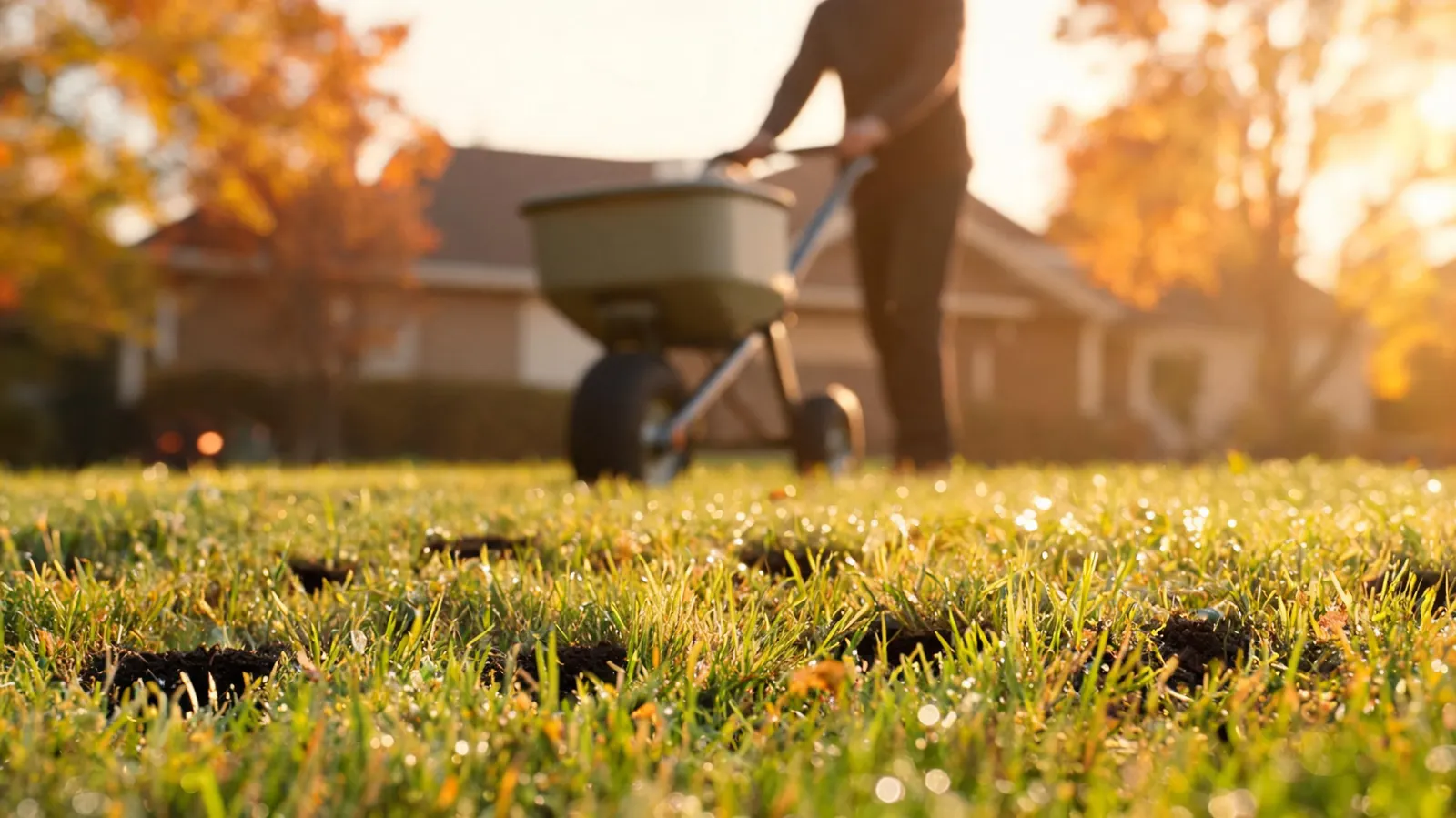
- Soil hits 65F and falling - core aerate, then overseed thin spots or the whole lawn.
- Seed germinates (7-14 days later) - keep it damp, mow high once it's established.
- 3-4 weeks after seeding - apply a fall feeding to push root growth.
- Same window - decide whether to skip pre-emergent (you overseeded) or apply it (you didn't).
- Top growth stops, soil still above 40F - lay down winterizer nitrogen.
Cool-season grass means Kentucky bluegrass, tall fescue, fine fescue, and perennial ryegrass. If your lawn is Bermuda, zoysia, St. Augustine, or centipede, this isn't your playbook - warm-season grass goes dormant in fall and gets none of this.
When is soil temperature right for fall overseeding?
Overseed when soil temp at 2 inches deep reads 50-65F and trending down. Cool-season seed germinates fastest around 60F, usually sprouting in 7 to 14 days. Below 50F germination stalls; above 65F you're fighting summer disease and weed pressure. That window is the single most important thing to nail all fall.
Aerate first, on the same day if you can. Pull cores with a core aerator - not a spike aerator, which just compacts soil sideways. The holes give seed direct contact with soil and open compacted ground so roots and water get down. Overseed right into the freshly aerated lawn, then keep the top half inch of soil moist until you're mowing the new grass.
Is it too late to overseed in November? In most of the country, yes. Once soil drops below 50F seed won't reliably germinate before winter, and seed that sits ungerminated often rots or feeds birds. If you missed the window, wait and dormant-seed in late fall or hold for spring.
Timing by region (soil-temp windows are the real trigger - these dates are the usual arrival):
| Region | Typical overseed window | Watch for |
|---|---|---|
| Northeast | Late Aug - late Sept | Cold snaps ending the window early upstate |
| Midwest | Late Aug - late Sept | Fast temperature drops after the equinox |
| Northwest | Early Sept - mid Oct | Longer, milder window west of the Cascades |
| Southwest (high elevation) | Late Aug - Sept | Very short window; move early |
| Southeast (transition zone) | Mid Sept - mid Oct | Overseeding fescue over cooling warm-season lawns |
Note: Florida, the Gulf Coast, Hawaii, and low-desert Arizona are warm-season country. Cool-season overseeding there is limited to winter ryegrass over dormant Bermuda, which follows a different schedule entirely.
When and what should I feed in fall?
Feed 3 to 4 weeks after overseeding, once the new grass has been mowed at least once. Fall is the most important feeding of the year for cool-season lawns because the grass pours energy into roots, not blades. A balanced fall fertilizer with steady nitrogen builds the root system that carries the lawn through winter and gives you an early green-up.
If you didn't overseed, you can feed as soon as soil cools into the 60s and the lawn is actively growing. Either way, water it in and follow the label rate. Don't guess on amounts.
What to reach for:
- A fall or "turf builder" fertilizer with a solid nitrogen number and some potassium
- Slow-release nitrogen if you want steadier feeding over 6-8 weeks
- A starter fertilizer specifically if you overseeded and want extra phosphorus for roots (check local rules - some states restrict phosphorus)
Skip weed-and-feed products this time of year if you seeded. The herbicide in them will kill or stunt your new grass.
Should I apply pre-emergent in fall?
Only if you did not overseed. Fall pre-emergent stops annual bluegrass (poa annua) and winter annual weeds from sprouting, and it works when soil temp drops to around 70F and falling. The catch: pre-emergent doesn't know the difference between poa seed and your grass seed. It blocks both.
So it's a genuine either/or decision:
- You overseeded: skip pre-emergent entirely this fall. Manage poa in spring or next fall instead.
- You didn't overseed and poa is a problem: apply a fall pre-emergent when soil hits roughly 70F on the way down, usually early September across much of the North.
Poa annua is the big fall target, but the same timing catches other winter annuals:
- Annual bluegrass (poa annua)
- Common chickweed
- Henbit
- Purple deadnettle
- Annual ryegrass volunteers
Can I overseed and still control poa? Not with a pre-emergent in the same fall. Pick one. Most people overseed in fall and handle poa the following season, since a thick lawn crowds out a lot of it on its own.
When do I put down winterizer?
Apply winterizer when top growth stops but the soil is still above 40F - usually late October into November for most cool-season regions. At that point the grass has quit growing blades but the roots keep taking up nitrogen and storing it. That stored energy is what greens the lawn up fast next spring.
The signal is simple: you've mowed for the last time and the grass isn't regrowing, but the ground hasn't frozen. In Columbus that's often early November. In Boston, late October. In the Pacific Northwest it can stretch toward Thanksgiving. Watch the soil temp, not the frost.
Use a fall/winterizer fertilizer and water it in. Once soil drops below 40F the roots shut down and any nitrogen you apply just sits there or runs off. Don't waste it.
Note: In high-elevation and far-northern lawns where the ground freezes early, the winterizer window can slam shut in October. If snow's already flying, you've missed it - fold that nitrogen into your regular fall feeding next year instead.
FAQ
How long after overseeding can I mow?
Wait until the new grass reaches about 3 to 4 inches, which is usually 3 to 4 weeks after germination. Make sure your mower blade is sharp so it cuts rather than tears the tender seedlings, and never remove more than a third of the blade height in one pass. Mow when the grass is dry.
Can I aerate without overseeding in fall?
Yes. Core aeration on its own relieves compaction and helps water, air, and fertilizer reach the roots, and fall is a great time to do it. If you aerate without seeding, you're free to apply a fall pre-emergent afterward since there's no seed to protect.
What soil temperature should I use to time everything?
Overseed at 50-65F, apply fall pre-emergent around 70F and falling, and lay winterizer when growth stops but soil is still above 40F, all measured at about 2 inches deep. Air temperature swings too much day to day to be reliable. Track your ZIP's live soil temperature and let that trigger each step.
Is it better to overseed or apply pre-emergent in fall?
If your lawn is thin or patchy, overseed - a dense lawn is the best long-term weed control there is. If your lawn is already thick and poa annua is your main headache, apply pre-emergent instead. You can't do both in the same fall because pre-emergent stops your grass seed from germinating.
Stop guessing the timing — we'll watch your soil for you.
See your live soil temperature and this year's treatment windows for your ZIP, free.
Or get free email alerts — one plain-English email the week each task is due.
Every guide above comes down to your local soil temperature — see the live number and this year's windows for your city: