Guides · By LawnTide · Updated September 30, 2026 · 6 min read
When to Apply Fall Pre-Emergent in Florida
Fall pre-emergent goes down in Florida when soil temperature drops to about 70°F and keeps falling. In North Florida that's early-to-mid October. Central Florida runs late October into November. South Florida usually skips it entirely. Miss that window and you're pulling poa and picking burweed spurs out of your feet all winter.
The whole point is prevention. Pre-emergent stops winter annual weed seeds from sprouting. It does nothing to weeds you can already see. So the calendar matters more here than almost any other lawn task.
When should I apply fall pre-emergent in Florida?
Apply when soil temperature at 2 inches deep hits 70°F on a falling trend for four or five straight days. Winter annual weeds germinate as the ground cools through that mark. Get your barrier down first, and the seeds never take hold.
Air temperature lies this time of year. A cool front rolls through, then it's back to shorts weather two days later. Soil temperature is the honest number. You can check the live soil temp for your ZIP at https://www.lawntide.com/lawn before you buy a single bag.
Here's the regional breakdown for Florida and the rest of the country, so you know how your timing compares:
| Region | Soil temp trigger | Typical fall window |
|---|---|---|
| North Florida (Panhandle, Jacksonville, Gainesville) | 70°F falling | Early-mid October |
| Central Florida (Orlando, Tampa, Ocala) | 70°F falling | Late October - November |
| South Florida (Miami, Naples, Fort Lauderdale) | Rarely reaches trigger | Usually not needed |
| Southeast (GA, SC, AL) | 70°F falling | Late Sept - October |
| Midwest / Northeast | 70°F falling | Sept - early October |
| Southwest (AZ, NM low desert) | 70°F falling | October |
| Northwest | 70°F falling | Sept - October |
Note: South Florida and the Keys rarely stay cool long enough for winter annuals to establish. If you've never had a poa or burweed problem down there, you probably don't need a fall application at all. Watch your own lawn history, not the calendar.
What winter weeds does fall pre-emergent stop in Florida?
Fall pre-emergent targets the winter annual complex - weeds that sprout in fall, grow through the cool season, and die off by late spring. In Florida the big offenders are annual bluegrass, chickweed, henbit, and lawn burweed. Burweed is the one that really hurts.
Here's the winter weed list a fall application handles:
- Annual bluegrass (Poa annua) - the light-green, clumpy grass that seeds like crazy
- Lawn burweed (spurweed) - the one with the painful spiny burs
- Common chickweed - low, sprawling mats with tiny white flowers
- Henbit - square stems, purple flowers, mint family
- Corn spurry and hop clover - common in thin, sandy Florida turf
- Wild geranium (Carolina geranium)
Does pre-emergent kill weeds that are already growing? No. Pre-emergent only stops seeds from establishing. If you already see poa or chickweed, you'll need a post-emergent labeled for your grass. The pre-emergent is strictly a fall insurance policy against next season's crop.
Why is lawn burweed the weed to worry about?
Burweed is worth its own section because of the timing trap. It germinates in fall when nights cool off, grows quietly and soft all winter, then forms sharp spiny burs in late winter and spring. By the time you feel those spurs, it's too late to stop them.
Those spurs are the seed pods. They stick to bare feet, dog paws, and shoes. Once a lawn has burweed, it reseeds itself every year unless you break the cycle. And the only reliable way to break it is a fall pre-emergent before germination.
If you wait until you can see burweed in January or February, your options narrow to post-emergent herbicides - and on St. Augustine, those choices are limited and risky. Prevention in October or November is the easy route.
When do burweed spurs actually appear? Usually February into March in Central Florida, a bit earlier in warm years. The plant is present and growing long before that. Fall is your window; spring is damage control.
How does grass type change my pre-emergent choice?
Grass type matters a lot in Florida because St. Augustine is sensitive to several common herbicides that bermuda and zoysia shrug off. Always match the product label to your specific grass. The wrong product can thin or kill a St. Augustine lawn.
- St. Augustine - the most sensitive. Read every label. Many pre-emergents are safe, but several post-emergents (like ones with atrazine limits or certain sulfonylureas) can injure it. When in doubt, don't guess - the label tells you.
- Bahia - tough and forgiving, but often kept as low-input lawns where owners tolerate more weeds anyway.
- Zoysia - handles most pre-emergents well. Confirm the label lists zoysia.
- Bermuda - the most herbicide-tolerant of the warm-season grasses.
Don't apply pre-emergent to a lawn you plan to reseed or plug soon. The same barrier that blocks weed seeds blocks grass seed. If you're overseeding with ryegrass for winter color, pre-emergent and overseeding don't mix - pick one.
Note: Never apply pre-emergent to newly sodded or newly plugged St. Augustine until it has rooted down and been mowed a few times. Check the product label for the exact wait, and don't rush it.
How do I apply it and does it need watering in?
Most granular pre-emergents need to be watered in with about a half-inch of irrigation within 24 to 48 hours of application. That activates the barrier at the soil surface. No water, no protection. Read your label for the exact amount and window.
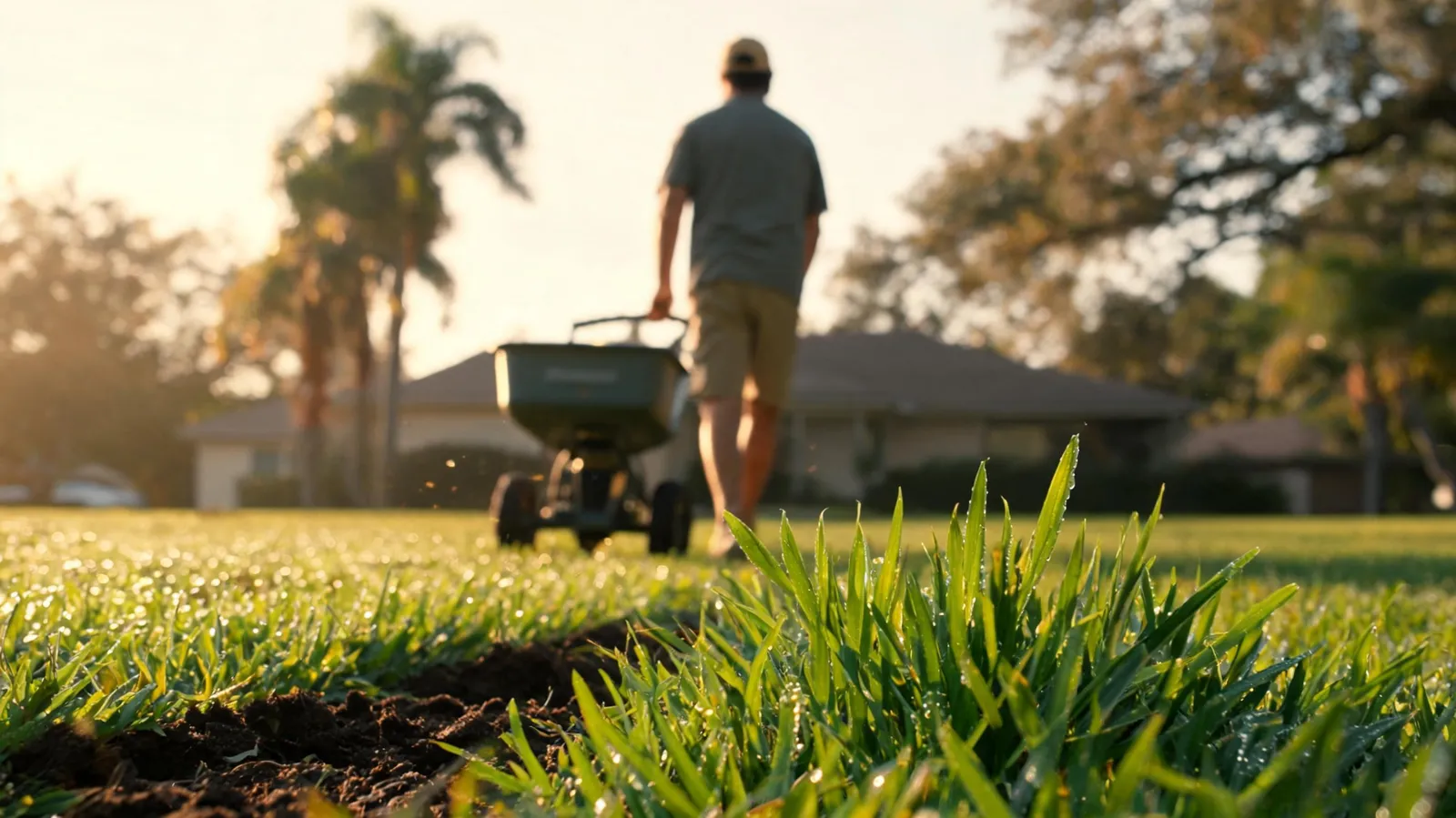
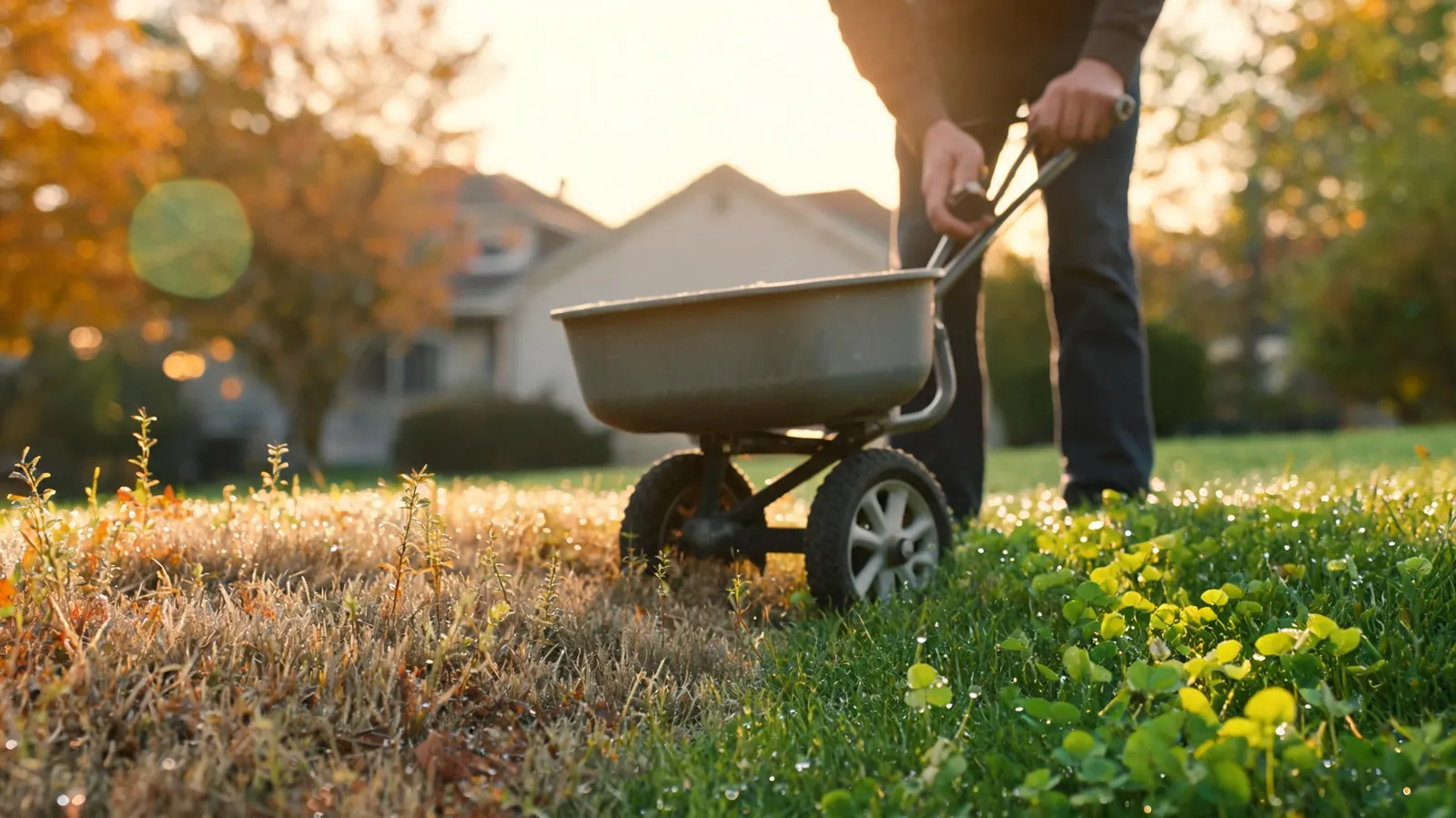
Spread it evenly. Skips and overlaps show up later as weed stripes or thin turf. Calibrate your spreader to the setting on the bag. And apply to a dry lawn on a calm day so granules land where you aim them.
Many Florida turf programs recommend a second pre-emergent application about 8 to 10 weeks after the first, because a single treatment breaks down before winter's germination window fully closes. If burweed has been a repeat problem, that split approach is worth it. Follow label re-treatment intervals.
FAQ
Is October too late for fall pre-emergent in Florida?
In North Florida, early-to-mid October is right on time - not too late. In Central Florida you have until November. What matters is applying before soil temperature settles below 70°F, since that's when winter weeds germinate. Check your local soil temp rather than assuming.
Can I use pre-emergent on a St. Augustine lawn?
Yes, but you must match the product to St. Augustine on the label. St. Augustine is more herbicide-sensitive than bermuda or zoysia, and the wrong chemical can thin or kill it. Many pre-emergents are labeled safe for it - read the bag and follow rates exactly.
Do I need fall pre-emergent in South Florida?
Usually not. South Florida rarely stays cool long enough for winter annual weeds like poa and burweed to establish. If you've never had a winter weed problem in Miami, Naples, or the Keys, you can likely skip it. Base the decision on your own lawn's history.
Will pre-emergent stop burweed if it's already up?
No. Once burweed has germinated, pre-emergent won't touch it. You'd need a post-emergent labeled for your grass, and on St. Augustine those options are limited. The lesson: apply in fall before germination so you never reach the painful-spur stage.
Stop guessing the timing — we'll watch your soil for you.
See your live soil temperature and this year's treatment windows for your ZIP, free.
Or get free email alerts — one plain-English email the week each task is due.
Every guide above comes down to your local soil temperature — see the live number and this year's windows for your city: