Guides · By LawnTide · Updated October 2, 2026 · 7 min read
When to Apply Fall Pre-Emergent in Arizona
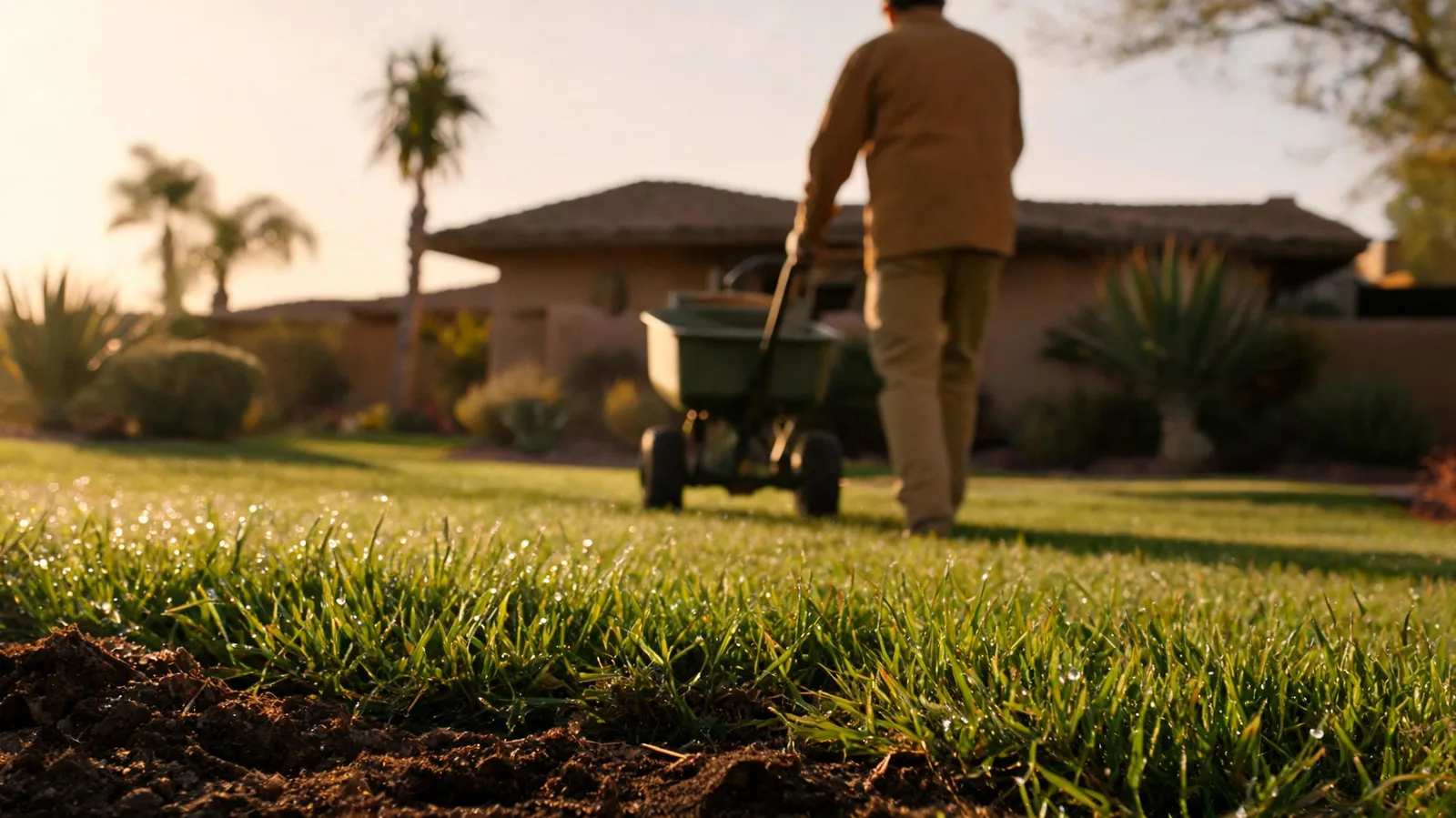
Apply fall pre-emergent in Arizona when soil temperature at 2 inches falls through 70°F. In Phoenix that's usually mid-October. Tucson runs a week or two earlier, and Flagstaff is done by early September. Get the timing right and you block the winter weed crop before a single seed sprouts.
But Arizona has a complication no other state deals with the same way: overseeding. If you plan to overseed your Bermuda lawn with ryegrass for a green winter lawn, pre-emergent is off the table. The same chemistry that stops Poa annua stops your ryegrass. You get one or the other. That decision drives your entire fall plan, so make it first.
When should I apply fall pre-emergent in Arizona?
Time it to the soil, not the calendar. Winter annual weeds germinate as soil cools through 70°F, so you want the barrier down a few days before that. In Phoenix that window lands around the first to middle of October. Higher and cooler spots come earlier.
The weeds that pop in an Arizona winter — Poa annua (annual bluegrass), spurge tail-off, filaree, London rocket, common mallow, henbit, shepherd's purse — all cue off falling soil temps. University turf programs across the Southwest use that same 70°F falling threshold. Air temperature swings too much day to day in the desert to trust it, especially in October when you can still hit 95°F at 4 p.m. and have cool soil by dawn.
Check your actual 2-inch soil temperature for your ZIP at https://www.lawntide.com/lawn so you're not guessing off a neighbor's lawn three climate zones away.
How many days before germination should pre-emergent go down? Aim for 7 to 10 days ahead of that 70°F mark. The product needs water to activate and move into the top inch of soil. Put it down dry and leave it, and you've wasted a pass.
Timing by Arizona region
Arizona spans low desert, high desert, and mountain country, so a single date doesn't work statewide. Match your area to the band below.
| Region | Typical cities | Soil hits 70°F falling | Pre-emergent window |
|---|---|---|---|
| Low desert | Phoenix, Mesa, Scottsdale, Yuma | Mid-October | Oct 1 – Oct 15 |
| Mid desert | Tucson, Casa Grande | Late Sept – early Oct | Sept 20 – Oct 5 |
| High desert | Prescott, Sedona, Kingman | Mid-September | Sept 5 – Sept 20 |
| Mountains | Flagstaff, Show Low, Payson | Early September | Aug 25 – Sept 10 |
Note: Yuma and the far southwest corner run the warmest in the state. Soil there can stay above 70°F into late October some years, so push your window later rather than jumping the gun on a hot fall.
If you're in Phoenix and it's the first weekend of October, you're right on time. In Flagstaff that same weekend you're already late — your window closed a few weeks back.
Pre-emergent or overseed — which one?
You can't do both in the same fall. Overseeding means spreading perennial ryegrass seed over dormant Bermuda for a green winter lawn. Pre-emergent kills germinating seed. Apply it and your ryegrass never comes up.
So decide what you want your lawn to look like from November through April:
- Want green all winter? Overseed. Skip pre-emergent on the turf this fall. You'll hand-pull or spot-spray the winter weeds that sneak in.
- Fine with dormant tan Bermuda? Apply pre-emergent. No mowing all winter, no weeds, far less water. This is the low-effort choice.
The conflict is sharpest in Phoenix because the overseed window — early to mid-October, when night lows settle into the 60s — overlaps almost exactly with the pre-emergent window. Same two weeks, two opposite jobs.
Can I overseed and still control winter weeds? Yes, just not with a pre-emergent. Once your ryegrass is established and mowed a few times, you can spot-treat broadleaf weeds with a post-emergent labeled for ryegrass. Read the label — some products that are safe on Bermuda will burn ryegrass.
What if I overseed this year but want pre-emergent next year? Let the ryegrass die back in late spring as the Bermuda wakes up, then get back on a normal fall pre-emergent schedule the following October. One overseed year doesn't lock you in.
Does xeriscape and gravel need pre-emergent too?
Absolutely. Gravel yards and desert landscaping are where winter weeds throw their biggest party in Arizona. Blown-in seed lands in the rock, catches the first winter rain, and by February you've got a green fuzz of London rocket and filaree across the whole front yard.
Pre-emergent works the same in gravel as in turf — it creates a barrier in the top layer of soil under the rock. Same 70°F falling trigger, same mid-October timing in Phoenix. The common winter offenders in desert landscaping:
- London rocket (the tall yellow-flowered one that takes over)
- Common mallow (cheeseweed)
- Filaree (redstem and whitestem)
- Annual bluegrass (Poa annua)
- Shepherd's purse
- Prickly lettuce
- Sowthistle
Granular pre-emergents spread easily over gravel. Water it in afterward — a quick run of the drip or a hose rinse works if no rain's coming. Without activation water it just sits on top of the rock doing nothing.
Note: A fresh pre-emergent barrier won't touch weeds that already germinated. If you've already got green coming up in the gravel, pull or spot-spray it first, then lay down the pre-emergent to stop the next wave.
How long does fall pre-emergent last?
Most fall applications hold for 3 to 4 months, which covers the main winter germination window through roughly February. In a wet winter with a strong second flush, a lot of Arizona homeowners split the season: one application in October, a second in late December or early January to extend the barrier into early spring.
The desert's winter rains come in waves. A single October pass can thin out by the time the February rains hit, and that's exactly when a second germination round fires off. If your yard historically weeds up in late winter, plan the split application from the start.
Does pre-emergent need rain or can I water it in? Either works. The product needs about a quarter to half inch of water within a few days to move into the soil. If no rain is forecast, run your irrigation or drag a hose out. Don't wait two weeks hoping for a storm.
FAQ
Is it too late to apply pre-emergent in Phoenix in November?
Usually, yes, for the main winter flush. By November the soil has dropped well below 70°F and the first wave of winter weeds has already germinated. Pre-emergent can't kill what's already up. You'd be better off spot-treating existing weeds and applying a January round to catch the late-winter flush.
Can I use the same pre-emergent I use in spring?
Often yes — many common active ingredients work for both the spring and fall weed flushes. The difference is timing and target weeds, not necessarily the product. Spring targets summer annuals like crabgrass and spurge; fall targets winter annuals like Poa annua and London rocket. Check that the label lists your winter weeds.
What soil temperature do winter weeds germinate at in Arizona?
Most winter annual weeds in the desert begin germinating as soil cools through about 70°F at a 2-inch depth, with peak germination in the 55–65°F range. That's why fall pre-emergent goes down as temps fall through 70, not after. You want the barrier set before the seeds wake up.
I overseeded with ryegrass. What do I do about weeds now?
Skip pre-emergent entirely this winter — it'll kill the ryegrass seed. Wait until your ryegrass is mowed two or three times and well established, then spot-spray broadleaf winter weeds with a post-emergent that's labeled safe for perennial ryegrass. Hand-pulling works fine for small outbreaks.
Stop guessing the timing — we'll watch your soil for you.
See your live soil temperature and this year's treatment windows for your ZIP, free.
Or get free email alerts — one plain-English email the week each task is due.

Every guide above comes down to your local soil temperature — see the live number and this year's windows for your city: