Guides · By LawnTide · Updated August 5, 2026 · 6 min read
When to Apply Crabgrass Pre-Emergent in Ohio
Get crabgrass pre-emergent down before your soil hits 55°F for three to four days straight. In most of Ohio that's mid-April, give or take a week depending on where you live. Miss that window and the seed germinates—no spray-on product stops crabgrass once it's already up.
The trick isn't the calendar. It's the soil. And soil warms up on its own schedule from Cincinnati to Cleveland.
What soil temperature does crabgrass need to germinate?
Crabgrass seed starts germinating when soil at a 2-inch depth holds 55°F for three to four consecutive days. That's the number university turf programs use across the Midwest. Once daytime soil creeps past that mark and stays there, the seeds crack open and it's too late for a preventer.
Pre-emergent doesn't kill seed. It builds a chemical barrier in the top layer of soil that stops the seedling as it tries to root. So the barrier has to be in place before germination, not during. That's why timing everything to the 55°F threshold matters more than any bag instruction that says "apply in spring."
Give yourself a buffer. Aim to have the product down and watered in one to two weeks before your soil is expected to reach 55°F. That covers you against a sudden warm stretch.
How do I know my exact soil temperature? You can check the live 2-inch soil temperature for your ZIP code at https://www.lawntide.com/lawn. It beats guessing off the air temperature, which runs several degrees ahead of the ground in spring.
Isn't blooming forsythia the signal to apply?
The old rule says spray when forsythia blooms drop. It's a decent backup, not gospel. Forsythia responds to air temperature and daylight, while crabgrass responds to soil temperature—and those two don't always line up. In a warm, dry March the shrubs can bloom a week or two before the ground is ready, and in a cold wet spring they can lag.
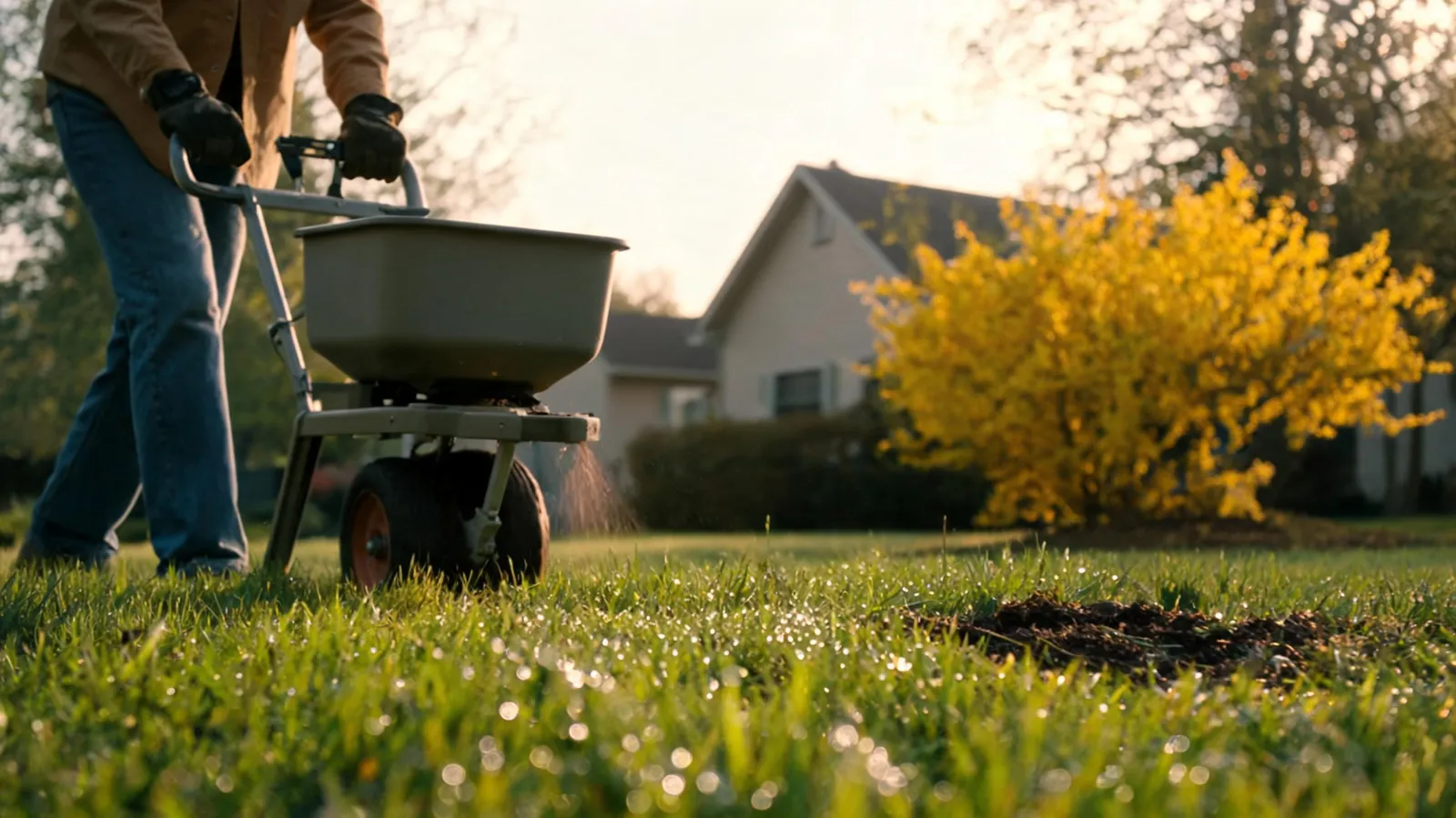
Use forsythia as a rough heads-up: when the yellow flowers fully open, you're getting close, so buy your product and clear your weekend. But confirm with an actual soil reading before you spread anything. The plant is a proxy. The dirt is the truth.
Here's the practical version. If you're in Dayton and the forsythia along your fence line is peaking around the first week of April, that's your cue to start watching soil temps daily. When the ground holds 52-54°F, put it down.
When should I apply pre-emergent in my part of Ohio?
Southern Ohio warms first, northern Ohio last, with the snowbelt around Lake Erie trailing everyone. The lake keeps Cleveland's eastern suburbs cool well into April. Here's how the state breaks down by soil-temperature timing.
| Region | Cities | Typical 55°F soil date | Apply window |
|---|---|---|---|
| Southern Ohio | Cincinnati, Portsmouth | Early April | Late March – first week of April |
| Southwest / Central | Dayton, Columbus | Mid-April | April 5 – April 18 |
| West-Central | Springfield, Marion | Mid-April | April 8 – April 20 |
| Northwest | Toledo, Findlay | Mid-to-late April | April 12 – April 25 |
| Northeast | Akron, Canton | Late April | April 15 – April 28 |
| Lake Erie snowbelt | Cleveland east suburbs, Ashtabula | Late April | April 18 – May 1 |
Note: Higher-elevation spots in eastern Ohio's hill country run a few days behind their region. If you're up around 1,200 feet in the southeast, treat yourself like Northeast Ohio timing even though you're on the map's south end.
If you're in Columbus and it's the first weekend of April, you're a touch early but fine to apply—the barrier will hold. If it's already the first of May in Cincinnati and you haven't done anything, you've likely missed it and should switch strategies.
Should I do one application or split it?
Split it if you want season-long control. A single application typically holds for 6 to 8 weeks. Ohio's crabgrass keeps germinating in flushes through late spring and early summer, so one barrier laid in mid-April can break down before the germination window closes.
The standard approach: put the first application down at the 55°F mark, then a second one 6 to 8 weeks later. In Columbus that means roughly mid-April and again around Memorial Day. The second round bridges the gap into July when soil temperatures peak and the last of the seed sprouts.
Check the product label for how much active ingredient it allows per season. Two lighter splits usually give better coverage than one heavy shot, but you can't exceed the annual maximum on the bag.
What if I miss the window?
If crabgrass is already up, a pre-emergent won't touch it. You'll need a post-emergent product labeled for crabgrass, and those work best on young plants with just a few tillers. Once it's a sprawling mat in July, chemical control gets tough and hand-pulling might be your friend.
The common products homeowners reach for in Ohio target the same weeds. A pre-emergent barrier laid on time stops these before they start:
- Smooth crabgrass
- Large (hairy) crabgrass
- Goosegrass
- Foxtail (yellow and green)
- Barnyardgrass
- Some annual sedges and spurge, depending on the product
Can I seed and apply pre-emergent at the same time? No. Most pre-emergents block all grass seed from rooting, including the lawn seed you want. If you're overseeding this spring, either skip the preventer or use a seeding-safe product like one with mesotrione—read the label to confirm it's cleared for new seed.
Does rain or watering matter after I apply?
Yes. Granular pre-emergent needs to be watered in to activate—typically about a quarter to a half inch of water within a few days of spreading. That moves the active ingredient off the granule and into the top layer of soil where the barrier forms. Check your label for the exact amount.
In April, Ohio usually supplies the rain for you. If a dry stretch sets in after you spread, run the sprinklers. And once the barrier is set, avoid heavy dethatching or aeration that spring—both punch holes in the layer and let seed slip through.
FAQ
Is April too late for pre-emergent in Ohio?
No, April is prime time for most of the state. Central and northern Ohio typically don't cross the 55°F soil threshold until mid-to-late April, so applying anytime from early April through the third week gives you a well-timed barrier. Southern Ohio should aim for late March into the first week of April.
Can I apply crabgrass pre-emergent in fall in Ohio?
Fall pre-emergent isn't for crabgrass—that seed is done germinating by then. A fall application targets winter annuals like poa annua. If crabgrass is your concern, spring timing at 55°F soil is the only window that works.
How long does pre-emergent last after I put it down?
Most products hold a barrier for 6 to 8 weeks before breaking down. Because Ohio crabgrass germinates in waves into early summer, a single spring application can fade before the last seeds sprout. A second application 6 to 8 weeks after the first extends protection into July.
What's the latest I can apply and still get results?
Apply before your soil holds 55°F for three to four straight days. Once that happens—usually mid-April in central Ohio, late April up north—germination begins and a preventer loses most of its value. Check your live ZIP soil temperature so you're spreading ahead of that mark, not behind it.
Stop guessing the timing — we'll watch your soil for you.
See your live soil temperature and this year's treatment windows for your ZIP, free.
Or get free email alerts — one plain-English email the week each task is due.


Every guide above comes down to your local soil temperature — see the live number and this year's windows for your city: