Guides · By LawnTide · Updated September 14, 2026 · 7 min read
Winterizer Fertilizer: When to Apply It (and When to Skip It)
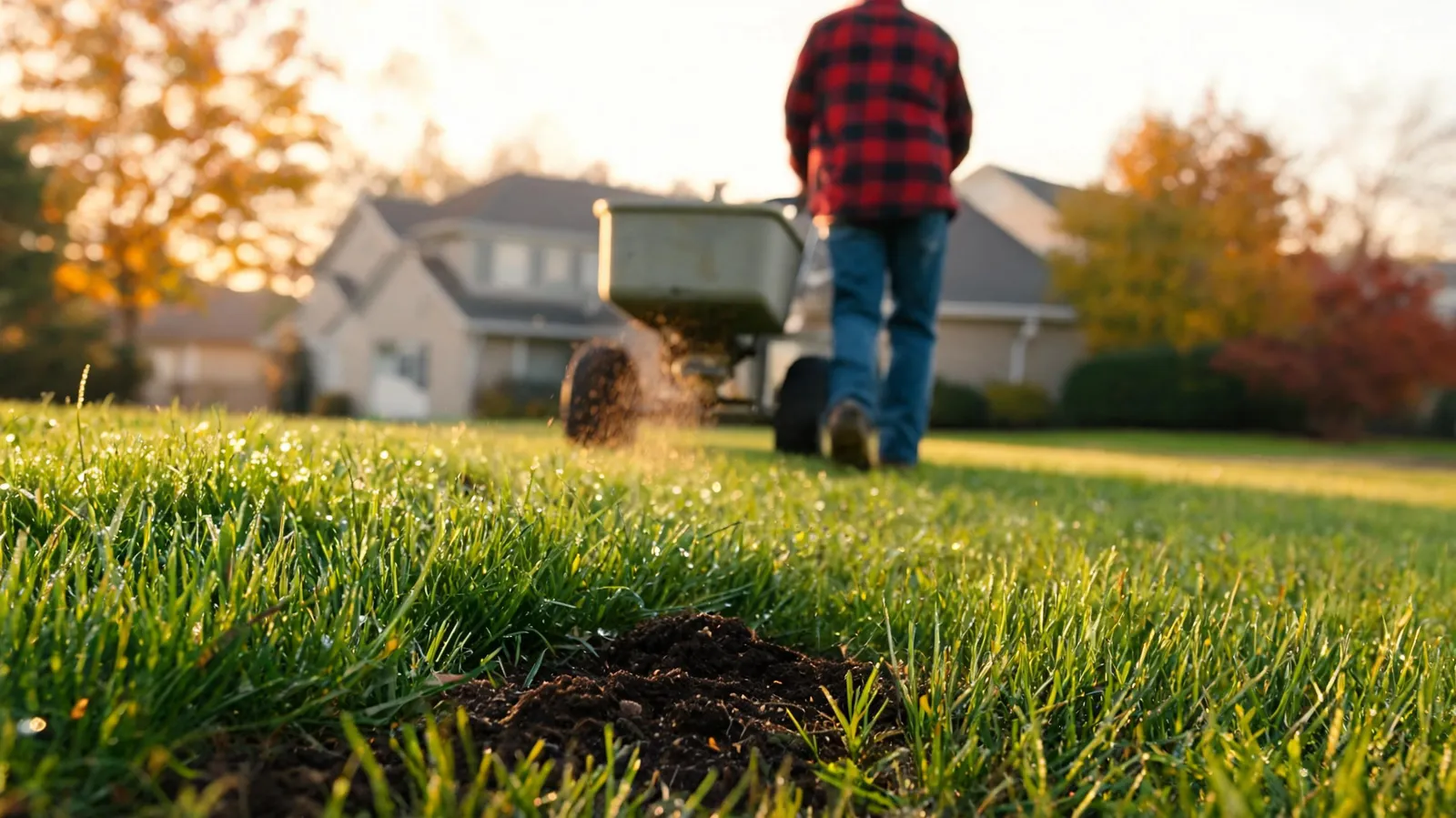
Apply winterizer when your soil temperature drops to 45-50°F and is still falling, which lines up with your last mow of the year. That's the whole timing rule. For most cool-season lawns in the northern US, you're looking at late October through November. Miss that window and the grass won't take the nitrogen up the way you want.
But here's the part the bag doesn't tell you: half the country shouldn't buy winterizer at all. If you've got Bermuda or zoysia, put the bag down.
What is winterizer fertilizer?
Winterizer is a late-fall feeding aimed at cool-season grass, meant to store energy in the roots before dormancy. The name is marketing more than science. What matters is a well-timed shot of nitrogen while the grass is still green but no longer growing tall.
Most bags labeled "winterizer" push a high middle or last number - phosphorus or potassium - with the pitch that it toughens grass for cold. University turf programs have mostly walked that back. What roots actually want going into winter is nitrogen, applied while the soil is still warm enough for roots to grab it. The plant stops growing blades but keeps building roots and stockpiling carbohydrates. That's the feeding that gets you a fast, thick green-up in April.
Is winterizer different from regular fall fertilizer? Not really. A quality winterizer is just a fall nitrogen application with timing baked into the name. A balanced fall fertilizer applied at the right soil temperature does the same job.
When should you apply winterizer?
Apply it when soil temperature at 2 inches deep falls to 45-50°F and keeps dropping - not on a calendar date. The grass has stopped growing up top by then but the roots are still active. That combination is the sweet spot. In practice this means late October into November for most cool-season regions.
The simplest tell is your mower. When you've mowed for the last time because the grass quit growing, you're in the window. If you're in Columbus and it's the first week of November, you're right on time. In Minneapolis, aim for mid-to-late October. Boston runs early-to-mid November most years.
You want the nitrogen down while roots can still absorb it but before the ground gets close to freezing. Too early and you push top growth you don't want. Too late and the roots are shutting down and the fertilizer just sits there, then washes off with snowmelt.
You can check the live soil temperature for your ZIP at https://www.lawntide.com/lawn instead of guessing off the calendar.
| Region | Typical winterizer window | Soil temp cue |
|---|---|---|
| Northeast | Late Oct - mid Nov | 50°F falling |
| Midwest | Mid Oct - early Nov | 50°F falling |
| Northwest | Nov - early Dec | 50°F falling |
| Southwest (high elevation) | Oct - Nov | 50°F falling |
| Transition Zone | Nov | 50°F falling |
Note: In the Southeast and low-elevation Southwest, most lawns are warm-season grass and don't get winterizer at all - see below.
Which grasses actually need winterizer?
Cool-season grasses need the late feeding. Warm-season grasses don't. That single distinction decides whether you buy the bag or skip it. Cool-season lawns stay green and keep growing roots into late fall, so a well-timed feeding pays off. Warm-season lawns are heading into full dormancy and can't use it.
Cool-season grasses that benefit:
- Kentucky bluegrass
- Tall fescue
- Fine fescue
- Perennial ryegrass
- Bentgrass
Warm-season grasses that should skip it:
- Bermudagrass
- Zoysiagrass
- St. Augustinegrass
- Centipedegrass
- Bahiagrass
- Buffalograss
Why should warm-season lawns skip winterizer?
Warm-season grass goes dormant when nights cool off, and feeding it late does more harm than good. It can't use the nitrogen, and a late push weakens the grass right when it's trying to shut down for winter. That raises the odds of winterkill and disease.
Bermuda, zoysia, St. Augustine, and centipede all stop growing and brown out as fall soil temps drop through the 60s. Their last feeding of the year should come in late summer to very early fall - roughly August into early September, depending on how far south you are - not in the true winterizer window. Push nitrogen into a warm-season lawn in November and you're asking for spring dead spot and cold damage.
What if I overseeded my Bermuda lawn with ryegrass? That's the exception. If you've overseeded with perennial ryegrass for winter color, you're now feeding the ryegrass, and a light late-fall feeding makes sense. Keep the rate modest so you don't overstimulate the dormant Bermuda underneath.
Note: Florida, coastal Georgia, and south Texas lawns are almost entirely warm-season. Winterizer marketing sold in those markets is mostly a waste of money.
What should be in the bag?
Look for nitrogen first. The old advice to load up on potassium for "cold hardiness" hasn't held up in turf research on established lawns that already have decent potassium levels. Nitrogen is the nutrient that drives fall root storage and spring green-up.
A fall feeding with a solid first number does the work. If a soil test shows your lawn is short on potassium, then a blend with more potassium is worth it - but base that on the test, not the label's claim. Skip the guessing.
Don't chase a specific ratio blindly. A general fall fertilizer with quick-release nitrogen applied at the right soil temperature outperforms a fancy "winterizer" applied at the wrong time. Timing beats formulation here. Follow the application rate on the product label - never eyeball it, because over-applying late in the season is how nitrogen ends up in the storm drain.
How does winterizer fit with your other fall applications?
Winterizer is the last feeding of the year, and it comes after your main fall nitrogen application. On a cool-season lawn, September is your heaviest, most important fall feeding. Winterizer is the follow-up several weeks later, right at growth stop.
A simple cool-season fall sequence looks like this:
- Early September: main fall feeding, soil around 70°F - the big one for recovery and root growth
- Late October to November: winterizer, soil 45-50°F falling, right at your last mow
Space the two feedings by about six to eight weeks. Water the winterizer in if you don't have rain coming, so it moves off the blades and down to the roots. Then put the spreader away until spring.
FAQ
Can I apply winterizer after the first frost?
Yes, a light frost is fine as long as the grass is still green and the soil hasn't frozen. Frost hits the blades, not the roots, and roots keep taking up nutrients until soil drops below about 40°F. Get it down before the ground freezes solid or the fertilizer just washes away with snowmelt.
Is it too late to apply winterizer in December?
In most of the northern US, December is too late because soil has usually dropped below 40°F and roots have shut down. The exception is the Pacific Northwest and other mild coastal zones, where soil can stay in the 45-50°F range into early December. Check your actual soil temperature rather than the calendar.
Do I need winterizer if I have a Bermuda or zoysia lawn?
No. Warm-season grasses go dormant for winter and can't use a late-fall feeding. Feeding them in the true winterizer window can cause winterkill and disease. Their last feeding should come in late summer or very early fall instead.
What happens if I skip winterizer on my fescue lawn?
Your lawn will be fine, just a little slower and thinner in spring. Winterizer isn't mandatory - it's an optimization. If you gave the lawn a strong September feeding, missing the late-fall application costs you some early green-up and root storage, not the whole lawn.
Stop guessing the timing — we'll watch your soil for you.
See your live soil temperature and this year's treatment windows for your ZIP, free.
Or get free email alerts — one plain-English email the week each task is due.


Every guide above comes down to your local soil temperature — see the live number and this year's windows for your city: