Guides · By LawnTide · Updated July 11, 2026 · 7 min read
When to Apply Fall Pre-Emergent: The 70°F-and-Falling Soil Rule
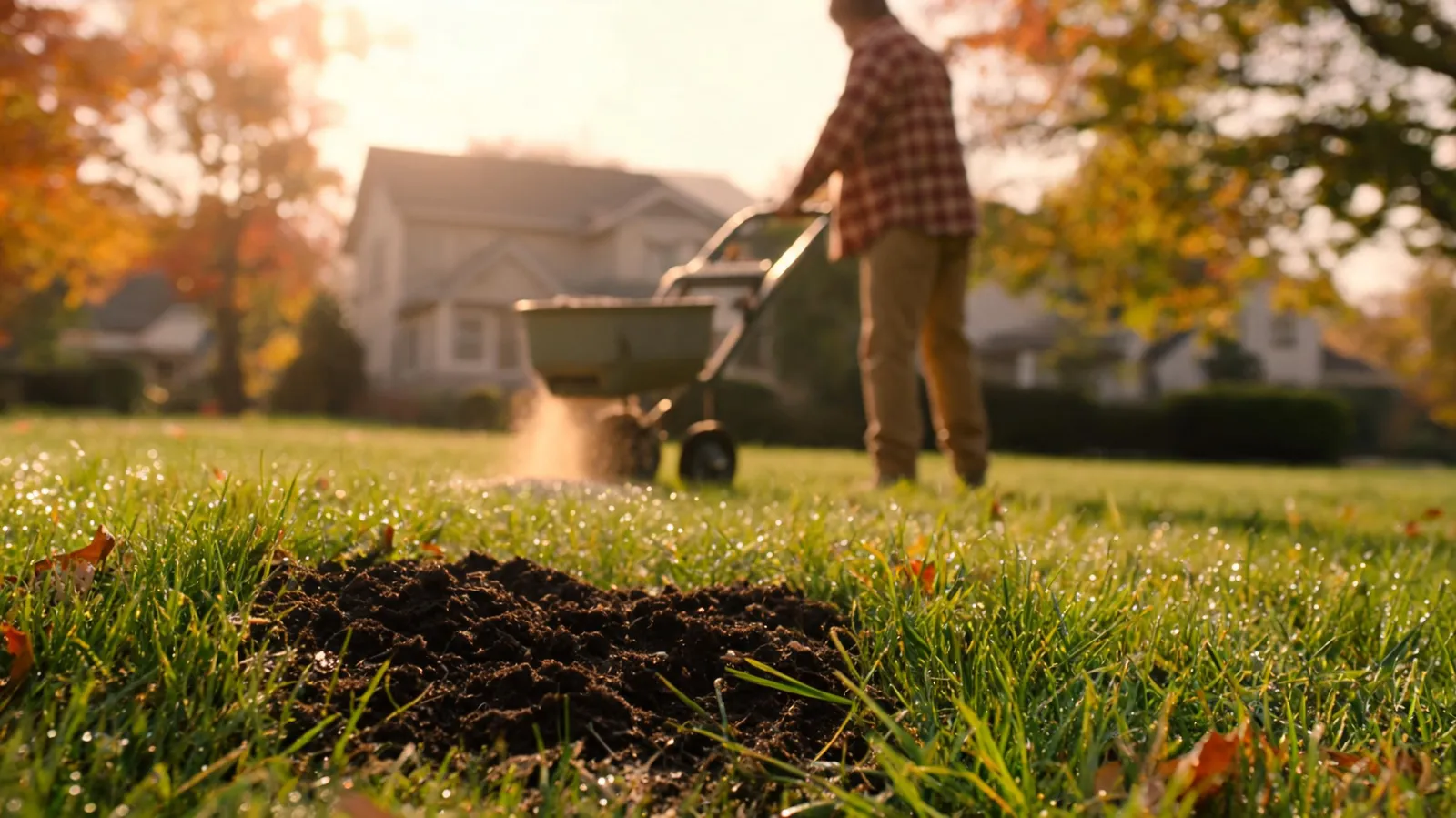
Fall pre-emergent goes down when your soil temperature at a 2-inch depth falls to 70°F and stays there for three straight days. That's the trigger. Not a calendar date, not the first cool night. For most of the country that window lands between mid-August and late October, and missing it by two weeks is the difference between a clean spring lawn and a carpet of poa annua.
Here's the part most homeowners never hear: fall pre-emergent matters as much as the spring round, and almost nobody talks about it. Everybody knows to put down crabgrass preventer in March. Far fewer people know that the ugly, lime-green clumpy grass taking over their lawn in February started germinating back in September. You stop it in the fall or you don't stop it at all.
Why does soil temperature falling to 70°F matter for fall pre-emergent?
Winter weeds germinate on the way down. As soil at 2 inches cools through 70°F and keeps dropping toward 55°F, seeds like poa annua wake up and sprout. Your pre-emergent has to be in the ground and watered in before that happens.
Think of it as the mirror image of spring. In March you're watching soil warm up through 50-55°F to catch crabgrass. In fall you're watching it cool down through 70°F to catch the winter crew. Same chemistry, opposite direction.
The reason the timing is so tight is that pre-emergent works by forming a barrier at the soil surface that stops germinating seeds from establishing roots. It does nothing to seeds that have already sprouted. If you wait until you spot the first poa plants, you're weeks late. University turf programs generally peg poa annua germination to soil temps in the 70°F-down-to-55°F range, which is exactly why 70°F-and-falling is the number to chase.
You can check the live 2-inch soil temperature for your ZIP code at https://www.lawntide.com/lawn instead of guessing off the air temperature. Air temp lies. Soil holds heat, so the ground is often warmer than the morning feels, and that lag is exactly what trips people up.
What weeds does fall pre-emergent actually stop?
Fall pre-emergent targets the cool-season weeds that germinate in autumn and run wild through winter and early spring. The headliner is annual bluegrass (poa annua), but it also hits henbit, chickweed, annual ryegrass, and several cool-season broadleaf weeds.
Poa annua is the one that drives people crazy. It's a bright, clumpy annual grass that seeds prolifically, dies off in early summer heat, and leaves bare patches right when you want the lawn to look good. One plant can drop thousands of seeds. Stop this fall's germination and you're cutting off next year's seed bank too.
The other winter weeds - henbit with its purple flowers, common chickweed spreading in mats - are easier to ignore but just as preventable. One well-timed fall application handles the whole group.
When should I apply fall pre-emergent in my state?
Apply when your local soil hits the 70°F-and-falling mark. That's earlier up north and later down south. Use the table below as a starting window, then confirm with actual soil readings because a warm September can push everything back a week or two.
| Region / States | Typical soil-hits-70°F window | Notes |
|---|---|---|
| Upper Midwest, New England (MN, WI, MI, ME, VT) | Mid-Aug – early Sep | Cools fast; don't wait for leaves to turn |
| Mountain West, Pacific NW (CO, UT, WA, OR) | Late Aug – mid-Sep | Elevation swings timing hard |
| Transition Zone (OH, KY, TN, VA, MO, KS) | Early Sep – early Oct | Prime poa country; second app pays off |
| Mid-Atlantic, Lower Midwest (NC, MD, IL, IN) | Mid-Sep – early Oct | Watch a warm spell that stalls the drop |
| Deep South (GA, AL, MS, SC, LA) | Late Sep – late Oct | Bermuda/zoysia lawns; time before dormancy |
| Florida, South Texas, SoCal | Mid-Oct – late Oct | Latest window; soil barely cools |
If you're in Columbus and it's the week after Labor Day, you're usually right in the pocket. In Atlanta, that same week is too early - wait until late September. In Minneapolis, Labor Day might already be a hair late.
What is the 3-consecutive-day rule and why does it matter?
Don't act on a single cool reading. Wait until soil temperature at 2 inches sits at or below 70°F for three consecutive days. One cold front can drop the soil overnight and then a warm week pulls it right back up.
The three-day rule filters out those head-fakes. A single Tuesday cold snap doesn't mean the season has turned. Three straight days at 70°F means the trend is real and germination is genuinely close. Apply on that third day or the day after.
Here's how it plays out. Say you're near Nashville in mid-September. Soil reads 74, 73, 72, then a front rolls through and you see 69, 68, 68. That's your three days. Get the pre-emergent down that weekend and water it in with about a quarter inch of irrigation so it activates before the seeds do.
Water-in matters as much as timing. Most granular pre-emergents need roughly 0.25 inch of water within 24-48 hours to move the active ingredient into the soil surface. Check your product label for the exact figure - rates and watering instructions are printed there and vary by product.
Should I split my fall pre-emergent into two applications?
Yes, if you want season-long control. A single application breaks down over 6-10 weeks, and poa annua germinates over a long stretch. A split program - a second application 6-8 weeks after the first - extends the barrier through the full germination window.
The first application goes down at 70°F-and-falling. The second lands as the soil cools further toward the mid-50s, which for a transition-zone lawn is usually late October or early November. This keeps the barrier intact through late-germinating seeds that would otherwise slip past a single dose.
Split applications are standard practice on golf courses and sports turf for exactly this reason. Poa doesn't all sprout on the same day, so a single barrier can time out before the last flush. Follow the label - it will list the maximum annual rate you can't exceed across both applications.
What if I already see poa annua in my lawn?
Pre-emergent won't touch it. Once you can see the plant, the seed has germinated and the barrier does nothing. At that point you're looking at a post-emergent herbicide labeled for poa annua, or hand-pulling if it's a small patch.
The mistake is spraying pre-emergent over visible poa and expecting it to die. It won't. Mark your calendar for next fall, hit the 70°F window, and prevent the next generation. For this season, a post-emergent product - applied per its label and safe for your turf type - is the only chemical route.
And don't seed and apply pre-emergent at the same time. Pre-emergent stops all seeds from establishing, including the desirable grass you just spread. If you're overseeding fescue this fall, you generally can't apply standard pre-emergent in the same window - the two cancel each other out.
FAQ
Can I use the same pre-emergent I use in spring? Often yes - many pre-emergents are labeled for both crabgrass in spring and poa annua in fall. The active ingredient overlaps. Check the label to confirm it lists poa annua and your grass type before you buy a second bag.
Does fall pre-emergent hurt my established lawn going into winter? No. Pre-emergent only affects germinating seeds, not established grass with an existing root system. It's safe for dormant warm-season turf and actively growing cool-season lawns, as long as you're not trying to establish new seed at the same time.
What if I miss the 70°F window entirely? If soil has already dropped well below 55°F, most poa has germinated and pre-emergent won't help much. Switch to a post-emergent for this year and set a reminder to catch the falling-70°F mark next fall. Earlier the following year beats late every time.
How long does one application keep working? Most fall pre-emergents hold a barrier for 6-10 weeks depending on the product and rainfall. That's why a second application 6-8 weeks later is worth it in heavy poa areas - it covers the late-germinating seeds a single dose would miss.
Stop guessing the timing — we'll watch your soil for you.
See your live soil temperature and this year's treatment windows for your ZIP, free.
Or get free email alerts — one plain-English email the week each task is due.

Every guide above comes down to your local soil temperature — see the live number and this year's windows for your city: